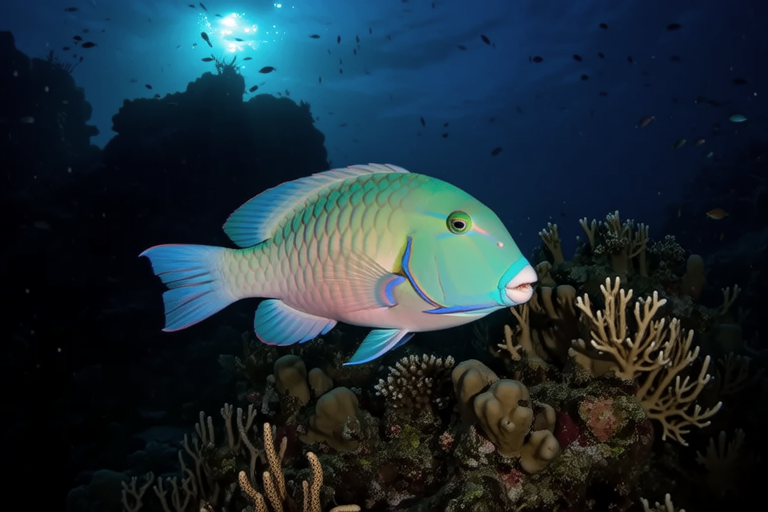
The Secret Nighttime Lives of Parrot Fish
Parrot fish, with their vibrant colors and fascinating behaviors, have long captured the imagination of marine enthusiasts. While their daytime activities are well-documented, their nocturnal behaviors remain shrouded in mystery. This article delves into the secret world of parrot fish, exploring their sleeping patterns, protective mucous cocoons, and the unique transformations that occur under the cover of night. We’ll also compare their daytime and nighttime habits, highlighting the intriguing aspects of their hidden lives.
Daytime Versus Nighttime: A Tale of Two Worlds
During the day, parrot fish are active and visible, grazing on algae and coral polyps. They use their beak-like mouths to scrape food from rocks and coral, contributing significantly to reef health. Their bold colors and social interactions make them a popular subject for snorkelers and divers. However, as the sun sets, these creatures undergo a dramatic transformation, retreating into a hidden world where they engage in secret activities.
The Nocturnal Retreat
As darkness descends, parrot fish seek shelter in crevices, caves, or among coral formations. Their vibrant daytime colors fade, replaced by more subdued hues that help them blend into their surroundings. This color change is not just for camouflage but also serves as a form of protection against predators that rely on vision to hunt. Some species even develop a mottled pattern that mimics the texture of the reef, making them nearly invisible to potential threats.
Building Mucous Cocoons: A Layer of Protection
One of the most remarkable nocturnal behaviors of parrot fish is their construction of mucous cocoons. These cocoons are made from mucus secreted by special glands near their gills. The process begins shortly before dusk, with the fish rubbing their bodies against the substrate to gather mucus. They then expel this mucus, creating a protective envelope around themselves. The cocoon serves multiple purposes:
- Camouflage: The mucus may contain particles from the surrounding environment, helping the fish blend into its surroundings.
- Predator Confusion: Predators may be deterred by the unusual scent of the cocoon, making it harder for them to locate the fish.
- Disease Prevention: The mucus may act as a barrier against parasites and harmful microorganisms.
Recent studies suggest that the cocoon’s composition could also play a role in oxygen exchange, potentially allowing the fish to conserve energy during sleep.
Biological Adaptations for Nighttime Survival
Parrot fish have evolved several biological adaptations to thrive in the challenging nighttime environment:
- Color Change: As mentioned earlier, parrot fish alter their pigmentation to match their surroundings, reducing their visibility to predators.
- Enhanced Senses: In the absence of light, parrot fish rely heavily on their other senses, such as smell and hearing, to navigate and find food.
- Energy Conservation: By constructing mucous cocoons and seeking shelter, parrot fish minimize their energy expenditure during the night.
These adaptations demonstrate the complexity of parrot fish biology and their ability to survive in diverse environments.
Unique Interactions and Transformations
Under the cover of night, parrot fish engage in behaviors that are rarely observed during the day. One such behavior is the formation of temporary schools. These schools provide safety in numbers, allowing fish to move collectively to new feeding grounds or deeper waters. Additionally, some species exhibit synchronized movements, which may serve as a form of communication or defense against predators.
Another fascinating aspect of parrot fish nighttime behavior is their transformation into a more streamlined shape. During the day, parrot fish have a rounded body that aids in scraping algae from surfaces. At night, however, they adopt a more elongated form, which may improve their swimming efficiency and reduce drag. This transformation is thought to be linked to changes in muscle structure and bone density, although the exact mechanisms are still being studied.
Scientific Insights and Recent Studies
Recent research has shed light on several aspects of parrot fish behavior, particularly their nighttime activities. For example, a study published in the journal Marine Biology examined the effectiveness of mucous cocoons in protecting parrot fish from predators. Researchers found that the cocoon’s chemical composition could indeed confuse predators, making it harder for them to detect the fish. Another study, conducted by the University of Queensland, investigated the color-changing abilities of parrot fish and discovered that the process is controlled by specialized cells called chromatophores, which expand or contract to alter the fish’s appearance.
These findings contribute to our understanding of parrot fish biology and highlight the importance of studying both daytime and nighttime behaviors to fully appreciate the complexity of marine ecosystems.
Conclusion: Unveiling the Mysteries
The secret nighttime lives of parrot fish reveal a world of fascinating behaviors and adaptations. From building mucous cocoons to changing colors and forming schools, these creatures demonstrate remarkable resilience and ingenuity in their quest for survival. By comparing their daytime and nighttime habits, we gain valuable insights into the mysteries of their hidden world. As research continues, we can expect to uncover even more about the secret lives of these captivating marine animals.
