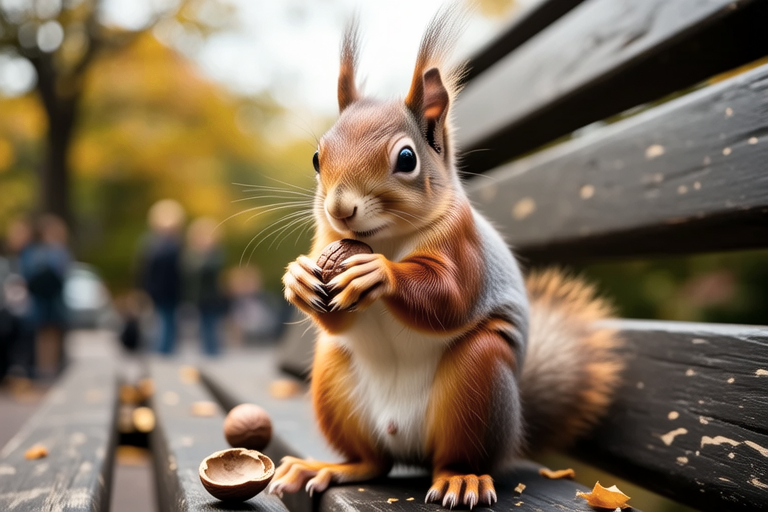
Squirrely Business: How These Charming Creatures Are Taking Over Cities
In recent years, cities around the world have seen an influx of a small, bushy-tailed creature that has become as much a part of urban life as streetlights and pigeons. Squirrels, once primarily forest-dwellers, have adapted remarkably well to city living, transforming urban spaces into their new homes. This article delves into the fascinating world of urban squirrels, exploring their increasing presence, adaptation strategies, impact on city ecosystems, the challenges they face, and the complex relationship they share with human residents.
The Urban Invasion
Urbanization has provided squirrels with new opportunities and challenges. As cities expand, forests shrink, and squirrels find themselves pushed out of their natural habitats. Yet, they have proven to be highly adaptable, thriving in the concrete jungles. The availability of food sources such as bird feeders, garbage bins, and parks filled with nuts and seeds has made cities an attractive destination for these resourceful creatures.
According to Dr. Sarah Johnson, a wildlife biologist at Urban Ecology Research Center, “The adaptability of squirrels is remarkable. They’ve managed to carve out niches in our cities, often to the point where they’re more numerous than in their original habitats.”
Adaptation Strategies
Squirrels have evolved various tactics to survive in urban environments. One of the most notable is their ability to navigate complex structures like buildings and power lines. Their strong claws and flexible bodies allow them to climb and leap with ease, making them adept at traversing urban landscapes. Additionally, they’ve learned to exploit human activities, such as scavenging from trash cans or raiding gardens for food.
Personal anecdotes from city dwellers often highlight these skills. “I once watched a squirrel scale a 10-story building just to reach a bird feeder on the rooftop,” recalls John, a resident of downtown Manhattan. “It was quite a sight!”
Impact on City Ecosystems
The presence of squirrels in cities can have both positive and negative effects on local ecosystems. On the positive side, they help distribute seeds, contributing to the growth of native plants and trees. This can enhance biodiversity and improve the aesthetic appeal of urban green spaces. However, their voracious appetite for seeds and young plants can also lead to conflicts with gardeners and park managers.
Dr. Johnson adds, “While squirrels play a role in seed dispersal, their feeding habits can sometimes outcompete other wildlife for resources, potentially altering the balance of local ecosystems.”
Challenges in Urban Environments
Despite their success, squirrels face several challenges in urban settings. Traffic accidents are a significant threat, with many squirrels becoming casualties on city roads. Predation by domestic cats and dogs is another issue, though it’s less common due to squirrels’ agility and speed. Moreover, exposure to pollutants and chemicals in urban environments poses health risks to these animals.
City planners and conservationists are increasingly recognizing the need to create safer spaces for wildlife. “We’re starting to incorporate more green roofs and vertical gardens in our urban designs,” says Jane, an urban planner. “These features provide additional habitats and food sources for squirrels, helping to mitigate some of the risks they face.”
Human-Squirrel Interaction
The relationship between humans and squirrels in cities is complex and multifaceted. While many people enjoy watching squirrels and feeding them, others view them as pests that damage property or cause noise disturbances. Managing this relationship requires a balanced approach.
Education plays a crucial role in fostering positive interactions. Community programs that teach residents about the needs and behaviors of squirrels can reduce conflicts. For instance, placing bird feeders away from windows can prevent window collisions, and securing trash bins can minimize scavenging.
Experts suggest that understanding the role of squirrels in urban ecosystems can change public perception. “When people realize that squirrels contribute to the ecological health of our cities, they’re more likely to appreciate them,” notes Dr. Johnson.
The Future of Urban Squirrels
As cities continue to grow and evolve, so too will the role of squirrels within them. Urban planning and conservation efforts must consider the needs of these adaptable creatures to ensure their survival and coexistence with human populations.
Looking ahead, there may be opportunities to integrate wildlife-friendly design elements into urban infrastructure. “Imagine streets with designated crossing points for squirrels, or parks designed specifically to support diverse wildlife,” envisions Jane. “Such innovations could create harmonious urban environments where both humans and wildlife thrive.”
In conclusion, squirrels have successfully transitioned from rural forests to bustling cityscapes, demonstrating remarkable adaptability and resilience. While their presence brings both benefits and challenges, understanding and appreciating these charming creatures can enrich our urban experiences and promote healthier city ecosystems.
