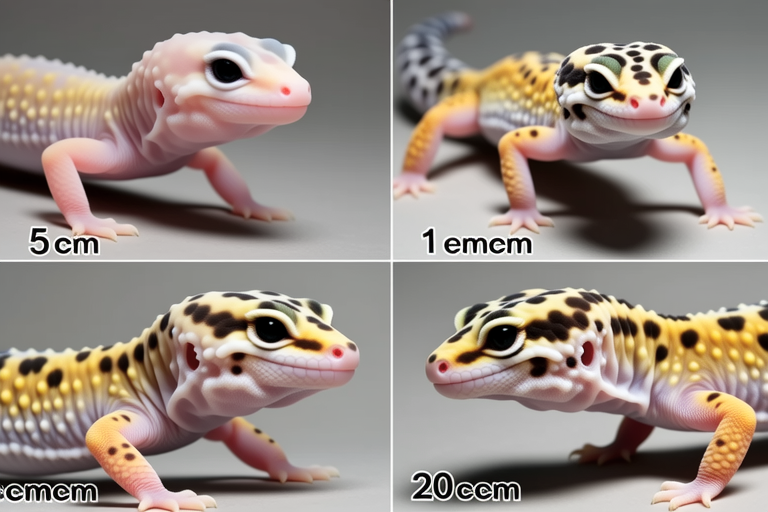
From Baby to Adult: Stages of Growth in Leopard Geckos Explained
Welcome to the fascinating world of leopard geckos! These charming reptiles are beloved pets due to their docile nature and vibrant colors. Understanding the stages of growth from hatchling to adult is crucial for providing the best care possible. This article will guide you through the various developmental phases, highlighting physical changes, dietary needs, habitat adjustments, and behavioral shifts. We’ll also share some scientific insights and practical tips to ensure your gecko thrives.
The Hatchling Stage (0-3 months)
Leopard geckos start life as tiny, adorable creatures measuring about 3 inches long. At birth, they’re fully independent and can hunt for themselves, though they need careful handling to avoid stress.
Physical Changes: Hatchlings have soft bodies and small tails. Their coloration is usually muted, but over time, they develop more vivid patterns. Their eyes are large relative to their body size, helping them spot prey.
Dietary Needs: In this early stage, baby geckos require live insects such as crickets and mealworms. Feed them daily, ensuring the insects are no larger than the space between their eyes. Dust the food with calcium and vitamin D3 supplements to promote bone development.
Habitat Adjustments: A small enclosure, around 10 gallons, is sufficient for a hatchling. Maintain a temperature gradient of 88-90°F on one side and 75-80°F on the other. Provide a shallow water dish and hide spots for security.
Behavioral Shifts: Baby geckos are curious and active, often exploring their environment. They may become stressed by too much handling or sudden movements. Gradually introduce them to gentle handling to build trust.
The Juvenile Stage (3-6 months)
By three months, your gecko has grown significantly, reaching lengths of 4-6 inches. Juveniles are more confident explorers and begin to show their unique personalities.
Physical Changes: Juveniles develop stronger bones and more pronounced patterns. Their tails may grow longer and thicker. You might notice changes in color intensity depending on lighting conditions.
Dietary Needs: Continue feeding with appropriately sized insects. Increase the frequency of dusting with calcium and vitamin D3 to support rapid bone growth. Introduce a variety of prey items like dubia roaches and waxworms for added nutrition.
Habitat Adjustments: Upgrade to a 20-gallon tank to accommodate their growing size. Ensure there’s ample space for climbing and hiding. Add a UVB light if not already present, but monitor exposure times to avoid overheating.
Behavioral Shifts: Juveniles become more social and may interact more frequently with their handlers. They can be trained to eat from your hand, which is a fun bonding experience. However, always supervise these interactions to prevent injury.
The Subadult Stage (6-12 months)
Subadults range from 6 to 10 inches in length. This phase marks significant physical and behavioral changes as they approach adulthood.
Physical Changes: Subadults develop their final adult coloration and pattern. Males begin to display secondary sexual characteristics like enlarged pores and prominent femoral pores. Females may show signs of maturity, including the ability to lay eggs.
Dietary Needs: Maintain a varied diet with larger insects. Offer gut-loaded prey to enhance nutritional value. Reduce the frequency of dusting to once or twice weekly to avoid over-supplementation.
Habitat Adjustments: If housing multiple geckos, consider separate enclosures to prevent territorial disputes. Ensure adequate ventilation and temperature control. Add climbing branches and additional hide spots to mimic natural environments.
Behavioral Shifts: Subadults exhibit more defined behaviors. Males may become more aggressive towards each other, while females can show nesting behavior. Encourage positive interactions by maintaining a calm environment and avoiding sudden disturbances.
The Adult Stage (Over 12 months)
Adult leopard geckos reach their full potential, typically 8-12 inches in length. They are mature and have settled into their adult routines.
Physical Changes: Adults have robust bodies and well-defined patterns. Males develop distinct features like wider heads and thicker tails. Females may display breeding behavior if housed with a suitable mate.
Dietary Needs: Continue providing a balanced diet of insects. Feed adults every other day, offering smaller quantities to prevent obesity. Monitor weight and adjust feeding schedules accordingly.
Habitat Adjustments: Adult geckos benefit from spacious enclosures, ideally 29 gallons or larger. Provide a basking area with a heat lamp and a cool zone for thermoregulation. Ensure the substrate is easy to clean and free from harmful chemicals.
Behavioral Shifts: Adults are generally calm and predictable. They may become less active during cooler months, entering brumation—a period of reduced activity similar to hibernation. During this time, reduce feeding and provide minimal disturbance.
Care Tips for Each Stage
Hatchlings: Prioritize warmth and safety. Use a heating pad under one side of the tank to create a temperature gradient. Keep the environment stable to prevent stress.
Juveniles: Encourage exploration and socialization. Offer new hiding spots and gradually introduce different prey items to stimulate curiosity.
Subadults: Pay attention to gender-specific behaviors. Separate males if necessary to prevent aggression. Provide nesting boxes for females to simulate natural egg-laying conditions.
Adults: Maintain a consistent routine. Regularly check for signs of health issues, such as loss of appetite or unusual behavior. Clean the enclosure thoroughly to prevent bacterial growth.
Conclusion
Raising a leopard gecko from hatchling to adult is a rewarding journey filled with learning and bonding. By understanding the stages of growth and adjusting care accordingly, you can ensure your gecko enjoys a long, healthy life. Remember, each gecko is unique, so observe their individual needs and respond accordingly. With proper care and attention, your pet will thrive and bring joy for many years to come.
