Top 10 Fascinating Facts About the Aquatic Agility of Water Monitors
The water monitor (Varanus salvator) is one of the most impressive reptiles when it comes to aquatic agility. Known for its remarkable adaptability, this species can thrive both on land and in water, showcasing a range of fascinating abilities that set it apart from many other reptiles. From their exceptional swimming capabilities to their deep-diving prowess, water monitors have developed a suite of adaptations that allow them to excel in their semi-aquatic lifestyle. In this article, we will explore ten of the most captivating facts about the aquatic agility of water monitors.
1. Exceptional Swimming Capabilities
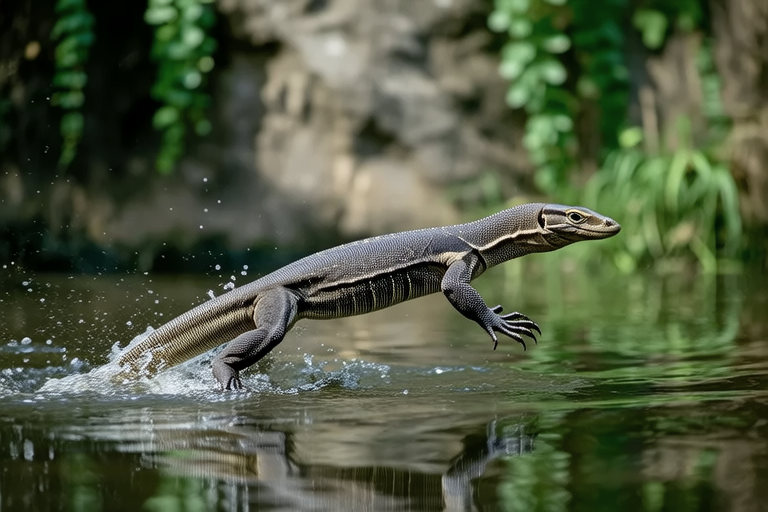
Water monitors are renowned for their excellent swimming skills. They possess powerful limbs and a long, muscular tail that acts as an efficient propeller, enabling them to move swiftly through water. Their streamlined body shape further reduces drag, allowing them to achieve impressive speeds. These lizards can swim at velocities of up to 20 miles per hour (32 kilometers per hour), making them one of the fastest swimmers among reptiles. This speed is crucial for evading predators and pursuing prey, especially in their preferred habitats near rivers, lakes, and coastal areas.
2. Remarkable Diving Depths
One of the most astounding aspects of water monitors’ aquatic abilities is their capacity to dive deep into bodies of water. They can descend to depths of up to 45 feet (14 meters) and remain submerged for extended periods. Their ability to hold their breath for approximately 30 minutes allows them to explore deeper parts of aquatic environments, where they may find food or shelter. This depth capability is particularly useful for locating fish, crustaceans, and other aquatic creatures that inhabit the lower levels of freshwater ecosystems.
3. Adaptations for Aquatic Life
Water monitors have evolved several physiological and behavioral adaptations to thrive in aquatic environments. For instance, their nostrils are equipped with valves that close automatically when they submerge, preventing water from entering their respiratory system. Additionally, their eyes are positioned high on their heads, providing excellent underwater vision while keeping the rest of their face above the surface for breathing. Their scales are also tough and resistant to abrasion, protecting them from sharp rocks and coral during dives. Furthermore, their webbed feet enhance propulsion, facilitating more efficient swimming.
4. Hunting Techniques in Water
Water monitors employ a variety of hunting techniques in aquatic settings. They are opportunistic feeders and will consume almost any available prey, including fish, amphibians, small mammals, birds, and even carrion. One of their primary hunting methods involves lying in wait near riverbanks or submerged logs, where they can ambush unsuspecting prey. They may also actively pursue fish by swimming rapidly through schools or using their keen sense of smell to locate hidden food sources. Their sharp teeth and strong jaws enable them to grasp and subdue slippery aquatic prey effectively.
5. Speed Underwater
Not only are water monitors fast swimmers, but they can also accelerate quickly in water. Their ability to reach top speeds rapidly allows them to catch fleeing prey or escape from potential threats. This acceleration is facilitated by their powerful muscles and streamlined body shape, which minimize resistance against water. The combination of speed and agility makes water monitors formidable hunters in aquatic environments, capable of outmaneuvering many of their potential competitors and predators.
6. Comparisons with Other Semi-Aquatic Animals
When compared to other semi-aquatic animals, water monitors exhibit unique characteristics that set them apart. For example, while crocodiles and alligators are also proficient swimmers, they rely heavily on ambush tactics and stealth to capture prey. In contrast, water monitors are more active hunters, using their speed and agility to chase down prey in open waters. Similarly, otters and beavers are adept at navigating aquatic environments but lack the extensive diving capabilities of water monitors. The latter’s ability to remain submerged for long periods and reach significant depths gives them a competitive edge in finding food and avoiding danger.
7. Survival Strategies
Water monitors have developed various survival strategies to thrive in their semi-aquatic habitat. One of these strategies is their ability to regulate their body temperature through thermoregulation. By basking in the sun or seeking shade, they maintain optimal body temperatures for digestion and metabolism. Additionally, their keen senses, including sight, smell, and hearing, help them detect potential threats or opportunities for feeding. Water monitors are also known to be intelligent and resourceful, often adapting their behavior based on environmental conditions. For instance, they may alter their hunting patterns or seek refuge in different locations depending on seasonal changes or human activity.
8. Unique Physical Characteristics
The physical attributes of water monitors contribute significantly to their aquatic agility. Their long, muscular tails not only serve as propulsion tools but also provide balance and stability while swimming. Their broad, flat heads allow for efficient biting and crushing of prey, while their sharp claws aid in climbing and digging. The webbing between their toes enhances their swimming efficiency, and their strong limbs enable rapid bursts of speed both on land and in water. These features collectively make water monitors well-suited for their dual existence in both terrestrial and aquatic realms.
9. Social Behavior and Communication
Although primarily solitary animals, water monitors do engage in social interactions, particularly during mating season. Male water monitors compete for mates through displays of strength and agility, often involving physical confrontations. Females may also display certain behaviors to attract males. Outside of the breeding season, water monitors tend to be more reclusive, spending much of their time alone. However, they do communicate with each other through a variety of signals, such as head-bobbing, tail-waving, and posturing. These forms of communication play important roles in establishing dominance hierarchies and maintaining social boundaries.
10. Conservation Status and Threats
Despite their impressive adaptability, water monitors face numerous threats to their survival. Habitat destruction, pollution, and overhunting are among the main challenges they encounter. Deforestation and urbanization reduce the availability of suitable habitats, forcing water monitors into smaller and less diverse areas. Pollution affects water quality, potentially impacting their health and reproductive success. Additionally, water monitors are hunted for their skin, meat, and eggs, leading to population declines in some regions. Conservation efforts are essential to protect these remarkable reptiles and ensure their continued existence in the wild.
In conclusion, the aquatic agility of water monitors is a testament to their evolutionary success. With their exceptional swimming abilities, diving depths, and unique adaptations, these lizards have become highly proficient in both terrestrial and aquatic environments. Understanding the fascinating aspects of their behavior and biology helps us appreciate the complexity of nature and underscores the importance of conservation efforts to safeguard these incredible creatures.
