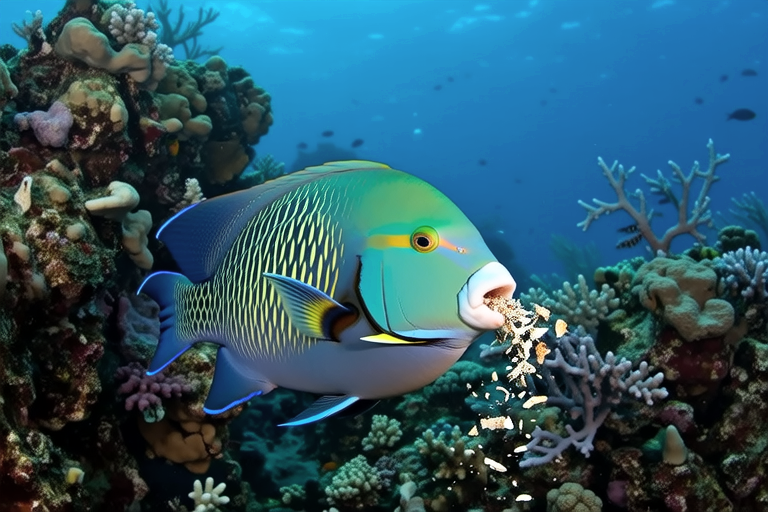
The Significant Role of Parrot Fish in Shaping Coral Reefs Within Marine Ecosystems
Parrotfish play a crucial role in maintaining the health and stability of coral reefs within marine ecosystems. Their unique feeding habits and contributions to coral growth through the consumption of algae have far-reaching impacts on biodiversity and reef health. This article explores the intricate relationship between parrotfish and coral reefs, providing scientific insights and examples of ecological changes when parrotfish populations fluctuate.
Feeding Habits of Parrotfish
Parrotfish are known for their distinctive beak-like mouths, which they use to scrape algae off coral surfaces. This process, called bioerosion, is essential for the maintenance of coral reefs. Parrotfish consume a variety of algae, including filamentous and turf algae, which can otherwise overgrow and smother corals, preventing them from receiving adequate sunlight for photosynthesis.
During feeding, parrotfish ingest large amounts of calcium carbonate, which forms the structure of coral skeletons. They then excrete this material as sand, contributing significantly to the formation of beaches and reef structures. In fact, it is estimated that a single large parrotfish can produce up to one ton of sand per year. This sand production not only helps maintain the physical integrity of reefs but also supports the development of new coral colonies by providing a substrate for settlement.
Contribution to Coral Growth
By controlling algal growth, parrotfish indirectly promote coral growth and survival. When algae dominate coral surfaces, it can inhibit coral reproduction and growth, leading to reduced coral cover and diversity. Parrotfish help prevent this by removing excess algae, allowing corals to thrive and reproduce more effectively.
Research has shown that areas with healthy parrotfish populations tend to have higher coral cover and greater coral diversity compared to areas where parrotfish numbers are low. For example, studies conducted in the Caribbean have demonstrated that reefs with abundant parrotfish populations experience faster coral recovery following disturbances such as bleaching events or hurricanes. This suggests that parrotfish play a vital role in promoting resilience and recovery of coral reefs.
Broad Impact on Biodiversity and Reef Health
The presence of parrotfish extends beyond their direct interactions with corals and algae. By maintaining a balance between these organisms, parrotfish create conditions that support a diverse array of other marine species. Many fish, invertebrates, and microorganisms rely on coral reefs for shelter, food, and breeding grounds. When parrotfish help keep reefs healthy and thriving, they indirectly support the entire ecosystem.
In addition to their role in regulating algal growth, parrotfish also contribute to nutrient cycling within coral reefs. As they consume algae, they release nutrients back into the water column, which can stimulate the growth of phytoplankton and other primary producers. This nutrient enrichment can enhance overall productivity within the reef ecosystem, benefiting a wide range of organisms.
Ecological Changes When Parrotfish Populations Fluctuate
When parrotfish populations decline, the consequences for coral reefs can be severe. Overfishing, habitat destruction, and environmental stressors such as climate change can all lead to reductions in parrotfish numbers. Without sufficient numbers of these important herbivores, algae can quickly outcompete corals for space and resources.
One well-documented example of this phenomenon occurred in the Caribbean during the 1980s and 1990s. At that time, overfishing of parrotfish led to an increase in algal cover on many reefs. As algae took over, coral cover declined, and the overall health and biodiversity of the reefs suffered. Similar trends have been observed in other regions where parrotfish populations have been depleted.
Conversely, efforts to protect and restore parrotfish populations can have positive effects on coral reefs. In some areas, marine protected areas (MPAs) have been established to safeguard parrotfish and other key species. These MPAs have shown promising results in terms of increased coral cover and improved reef health. For instance, a study conducted in the Philippines found that MPAs with healthy parrotfish populations experienced faster coral recovery compared to unprotected areas.
Interconnectedness of Marine Life
The relationship between parrotfish and coral reefs exemplifies the intricate web of interdependencies that characterize marine ecosystems. Each component of the system plays a critical role in maintaining balance and supporting the overall health of the environment. The loss of even one key species, such as parrotfish, can have cascading effects throughout the entire ecosystem.
Understanding and protecting the roles of different species, including parrotfish, is essential for ensuring the long-term sustainability of coral reefs and the many benefits they provide. By promoting conservation efforts and sustainable fishing practices, we can help preserve these vital ecosystems for future generations.
