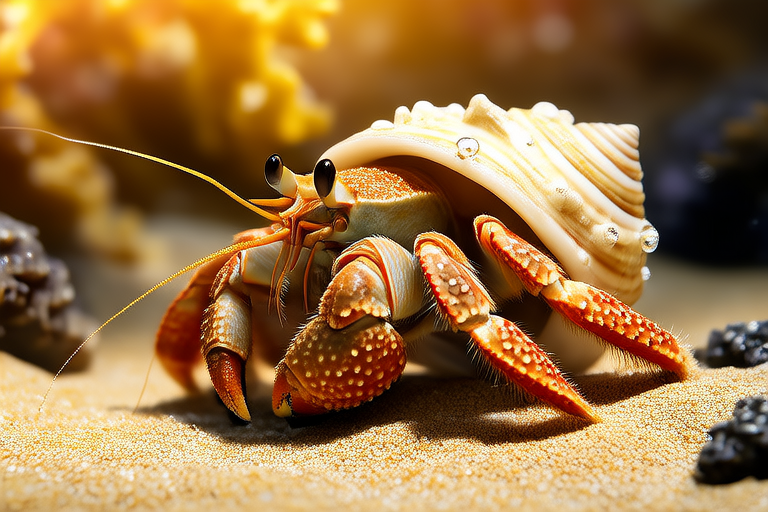
From Shell to Sole: Everything You Didn’t Know About Hermit Crabs
Welcome to the captivating world of hermit crabs! These fascinating creatures have been part of marine and terrestrial ecosystems for millions of years, yet there’s still so much to discover about them. From their unique biology to intriguing behaviors, hermit crabs are full of surprises. This article will dive deep into the lesser-known aspects of these delightful pets, providing you with a wealth of information that will make you appreciate your little crustacean companions even more.
The Biology Behind the Shell
Hermit crabs are decapod crustaceans, meaning they have ten legs. Unlike their distant relatives, such as lobsters and crabs, hermit crabs have soft abdomens that require protection. To safeguard themselves, they inhabit discarded shells, a behavior that has earned them their name. The abdomen of a hermit crab is curved to fit snugly within the shell, and it’s covered in feathery gills that need constant moisture to function properly. This reliance on shells is why keeping a humid environment is crucial for hermit crabs.
Did you know that hermit crabs have two sets of claws? The larger claw is used for defense and grabbing food, while the smaller one helps with grooming and manipulating objects. Their eyes are located at the ends of long eyestalks, allowing them to see above the shell for better visibility.
Unique Behaviors and Social Lives
Hermit crabs are social animals and thrive when kept in groups. They often gather in clusters, sharing space and resources, which can lead to some fascinating interactions. One such behavior is “piggybacking,” where smaller hermit crabs hitch a ride on the back of larger ones. This isn’t just for fun; it allows the smaller crab to explore new areas without the burden of carrying its own heavy shell.
Another unique behavior is “shell fighting,” where hermit crabs compete for better shells. This competition is fierce, and the loser usually ends up with a less desirable shell. Interestingly, hermit crabs don’t just fight over the size of the shell; they also consider the shape and weight distribution. A well-fitting shell can significantly improve a hermit crab’s mobility and overall quality of life.
Habitat Requirements
Hermit crabs are quite adaptable, but they do have specific habitat needs to thrive. In the wild, they live in coastal areas, often near coral reefs or mangroves. As pets, they require a terrarium with a mix of sand, coconut fiber, and moss to mimic their natural environment. The substrate should be deep enough for digging and should always remain moist to maintain humidity levels between 70% and 80%.
Temperature is another critical factor. Hermit crabs prefer temperatures between 72°F and 82°F (22°C to 28°C). A heat lamp or under-tank heater can help maintain these conditions. Additionally, providing a shallow water dish for drinking and soaking is essential. It’s important to ensure that the water is dechlorinated and changed regularly to prevent bacterial growth.
Common Misconceptions
One common misconception is that hermit crabs can survive solely on the food they find in their tank. While hermit crabs are scavengers, they still require a balanced diet to stay healthy. Offer them a variety of foods, including fruits, vegetables, and protein sources like fish flakes or boiled eggs. It’s also a good idea to provide calcium supplements to support their exoskeleton health.
Another myth is that hermit crabs are solitary creatures. As mentioned earlier, hermit crabs are highly social and benefit from living in groups. Isolating them can lead to stress and behavioral issues. Make sure to provide enough space and resources for each crab to minimize conflicts.
Tips for Responsible Ownership
Before bringing home a hermit crab, it’s crucial to understand their needs and commit to providing a suitable environment. Here are some tips to ensure your hermit crabs live happy, healthy lives:
- Provide a spacious tank: A 10-gallon tank is suitable for a small group of hermit crabs. Increase the size as you add more crabs.
- Include enrichment: Add items like branches, rocks, and small tunnels to stimulate their curiosity and encourage exploration.
- Monitor humidity: Use a hygrometer to track humidity levels and adjust as necessary.
- Offer a variety of shells: Provide a range of sizes and shapes to accommodate growing crabs and encourage healthy shell swapping.
- Handle with care: Hermit crabs can be sensitive to handling. Always wash your hands before interacting with them to avoid transferring oils or chemicals.
The Shell Selection Process
The process of selecting a new shell is both an art and a science for hermit crabs. When a hermit crab outgrows its current shell, it begins searching for a replacement. This search can take time, and hermit crabs may visit multiple shells before finding the perfect fit. Once they’ve found a suitable candidate, they’ll test it by poking their antennae and legs through the opening.
Interestingly, hermit crabs can be quite picky about their shells. Factors such as weight distribution, symmetry, and even color play a role in their decision-making process. Some species have even been observed trading shells with other crabs in what appears to be a form of cooperation.
It’s important to note that providing a variety of shells is crucial for hermit crabs. Without adequate options, they may become stressed or even sick if forced to stay in a poorly fitting shell. Regularly introduce new shells to your hermit crab’s environment to keep them happy and healthy.
Interesting Facts About Hermit Crabs
Hermit crabs are full of surprises, and here are some fascinating facts that might pique your interest:
- Hermit crabs can live for decades: With proper care, hermit crabs can live up to 30 years or more. This longevity makes them excellent companions for those looking for a long-term commitment.
- They can regenerate lost limbs: If a hermit crab loses a limb, it can regrow it over time. However, this process requires energy and can take several molts to complete.
- Hermit crabs are nocturnal: They are most active during the night, making them ideal pets for those who enjoy late-night activities.
- They communicate through vibrations: Hermit crabs use their legs to create vibrations in the substrate, a form of communication that helps them locate mates and warn others of danger.
In conclusion, hermit crabs are more than just charming pets; they are complex creatures with unique biology, behaviors, and needs. By understanding and meeting their requirements, you can provide a fulfilling life for your hermit crabs and enjoy many years of companionship. Whether you’re a seasoned hermit crab owner or just starting, there’s always something new to learn about these fascinating crustaceans.
