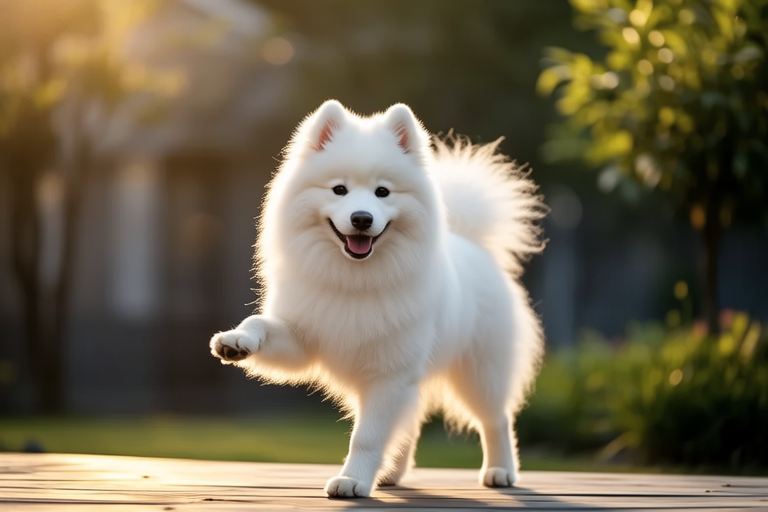
Samoyed: The Friendly, Playful Companion
The Samoyed is a breed of dog known for its distinctive snowflake-like paws and friendly, playful nature. Originating from Siberia, these dogs were bred by the nomadic Samoyede people for herding reindeer and pulling sleds. Their striking appearance, combined with their gentle and affectionate demeanor, has made them a popular choice for families seeking a loyal and energetic companion.
Physical Characteristics
Samoyeds are medium to large-sized dogs, typically weighing between 45 to 60 pounds and standing at around 19 to 21 inches tall. They have a thick, fluffy double coat that comes in various shades of white, cream, or biscuit. This coat serves as excellent insulation against cold weather, making them well-suited for snowy environments. One of their most recognizable features is their unique snowflake-like paws, which provide extra traction and insulation in icy conditions. Their tails are long and plumed, often curled over their backs, adding to their regal appearance.
Temperament and Common Activities
Samoyeds are renowned for their friendly and outgoing personalities. They are highly social animals that thrive on human interaction and enjoy spending time with their families. Their playful nature makes them ideal companions for children and other pets. Samoyeds love outdoor activities such as hiking, running, and playing fetch. They also excel in agility training and obedience competitions due to their intelligence and eagerness to please.
History and Origin
The Samoyed breed dates back thousands of years to Siberia, where they were originally bred by the nomadic Samoyede people. These dogs were used primarily for herding reindeer and pulling sleds across vast distances. Their strength, endurance, and loyalty made them invaluable partners for the Samoyede people. Over time, Samoyeds were introduced to Europe and North America, where they quickly gained popularity as working dogs and eventually as beloved family pets.
Becoming Popular as Pets
Samoyeds first gained recognition in the late 19th century when they were exhibited at dog shows in England. Their striking appearance and friendly disposition caught the attention of many dog enthusiasts, leading to increased interest in the breed. By the early 20th century, Samoyeds had become popular pets among wealthy families who appreciated their elegance and intelligence. Today, Samoyeds continue to be sought after for their loyalty, playfulness, and adaptability.
Care Requirements
Grooming
Samoyeds require regular grooming to maintain their thick coats. Brushing should be done at least twice a week to prevent matting and remove loose hair. During shedding season, daily brushing may be necessary. Bathing should be limited to avoid stripping the natural oils from their coat, but it’s important to keep their ears clean and nails trimmed. Dental hygiene is also crucial; regular toothbrushing and dental chews can help prevent gum disease.
Exercise Needs
Samoyeds are an active breed that requires plenty of exercise to stay healthy and happy. Daily walks, runs, or play sessions in a secure area are recommended. Mental stimulation through puzzle toys or training exercises can also help keep them engaged. It’s essential to ensure they get enough physical activity to prevent boredom, which can lead to destructive behavior.
Dietary Considerations
A balanced diet rich in protein and fat is vital for maintaining a Samoyed’s energy levels and overall health. High-quality commercial dog food formulated for active breeds is generally sufficient, but consult with your veterinarian to determine the appropriate portion sizes based on your dog’s age, weight, and activity level. Avoid overfeeding, as obesity can lead to joint problems and other health issues.
Anecdotes and Stories
One story that showcases the playful spirit of Samoyeds involves a family who adopted a young Samoyed named Buddy. Initially, Buddy was shy and reserved, but he quickly warmed up to his new surroundings. His favorite pastime became chasing after leaves in the fall, much to the delight of his siblings. Another heartwarming tale tells of a Samoyed named Max who would greet his owner every morning by bringing her slippers to the bedroom door. These anecdotes highlight the loyalty and affection that Samoyeds often display towards their families.
Tips for Potential Owners
If you’re considering adding a Samoyed to your family, there are several factors to keep in mind:
- Research and Preparation: Learn about the breed’s specific needs and prepare your home accordingly. Ensure you have the necessary supplies, such as a high-quality dog bed, sturdy toys, and appropriate grooming tools.
- Training and Socialization: Early training and socialization are crucial for developing good behavior and manners. Enroll in obedience classes or seek professional guidance if needed.
- Healthcare: Regular veterinary check-ups, vaccinations, and preventative treatments for parasites are essential. Be aware of common health issues like hip dysplasia and hypothyroidism.
- Time Commitment: Samoyeds require significant attention and interaction. Make sure you have the time and resources to meet their needs before bringing one into your home.
- Compatibility: Consider your lifestyle and living situation to ensure compatibility with a Samoyed. They are highly social dogs that thrive in households with ample space for exercise and play.
In conclusion, the Samoyed is a wonderful addition to any family seeking a loyal, playful, and affectionate companion. With proper care, training, and attention, these dogs can bring joy and happiness to your life for many years to come. Whether you’re an experienced dog owner or a first-time pet parent, a Samoyed’s unique blend of beauty and personality is sure to captivate you.
