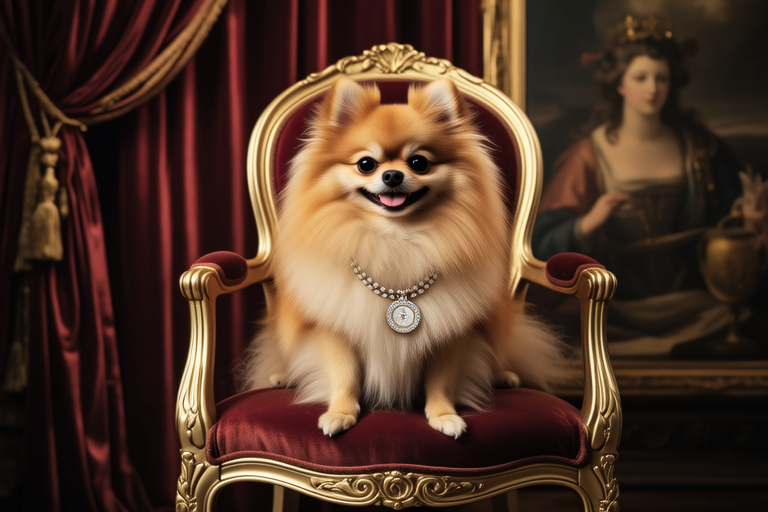
The Evolution of Pomeranians: From Royal Working Dogs to Beloved Pets
Pomeranians, with their fluffy coats and expressive faces, have captured the hearts of many pet lovers around the world. These diminutive dogs trace their lineage back to much larger ancestors who served important roles in ancient royal courts. The journey from these robust working dogs to the charming companions we know today is a fascinating tale that spans centuries, involving key historical figures and significant milestones.
Origins and Early History
The story of the Pomeranian begins in the region of Pomerania, now part of northern Poland and Germany, where the breed was known as the Spitz. These dogs were considerably larger than their modern counterparts, weighing up to 30 pounds, and were valued for their ability to herd livestock and pull sleds. Their thick double coats made them well-suited for the cold climates of Northern Europe.
Historical records suggest that Pomeranians were first brought to England in the 18th century by George II’s Queen Charlotte, who owned several of these dogs. Despite their royal patronage, they remained relatively obscure until the late 18th century when they gained prominence due to the influence of Queen Victoria.
The Role of Queen Victoria
Queen Victoria played a pivotal role in popularizing the breed. She fell in love with a small red Pomeranian named Marco at the 1888 Berlin Exposition and brought him back to Britain. Under her patronage, the breed began to be selectively bred for smaller sizes and more varied colors, leading to the creation of the modern Pomeranian.
Queen Victoria’s passion for Pomeranians was instrumental in transforming them from working dogs into fashionable pets among the nobility. Her enthusiasm inspired other members of the aristocracy to acquire these charming little dogs, further increasing their popularity.
Size Reduction and Genetic Changes
The transition from large working dogs to small companion animals involved significant genetic modifications. Breeders focused on producing smaller dogs with more diverse color patterns, resulting in the diminutive size and wide range of coat colors seen in contemporary Pomeranians. This selective breeding also led to changes in temperament, making them more suitable as indoor pets rather than outdoor workers.
Today, Pomeranians typically weigh between 3 and 7 pounds and come in a variety of colors, including black, brown, orange, cream, and sable. Their double coats consist of a soft undercoat and a longer, harsher outer coat, which requires regular grooming to prevent matting.
Breed Characteristics and Care Requirements
Pomeranians are known for their alertness, intelligence, and playful nature. They are loyal to their owners and often form strong bonds with one person in particular. However, they can be somewhat reserved around strangers and may bark excessively if not properly trained.
Caring for a Pomeranian involves regular grooming to maintain their luxurious coat. Daily brushing helps prevent tangles and keeps their fur looking its best. Additionally, they require regular exercise to stay healthy and mentally stimulated. Despite their small size, Pomeranians enjoy walks and playtime, though they should be protected from extreme temperatures due to their thick coats.
