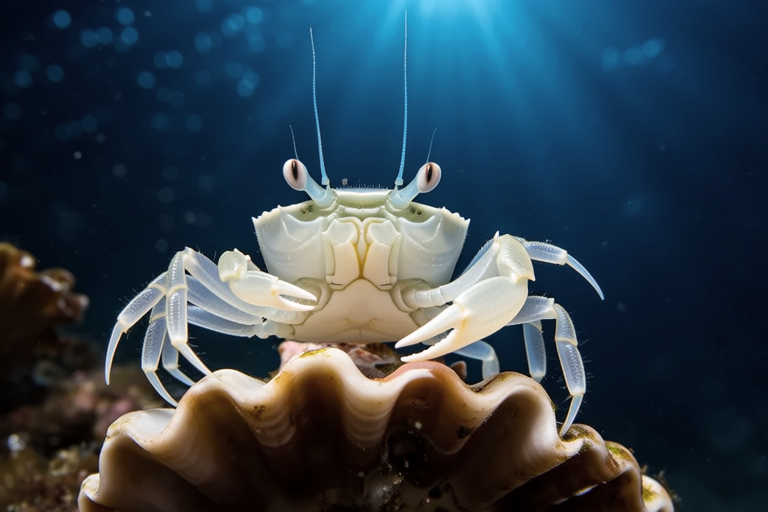
The Unique Lifecycle and Ecological Role of Pea Crabs
Pea crabs (Pinnotheres) are a fascinating group of tiny crustaceans that live within the bodies of other marine animals, forming intricate symbiotic relationships. Despite their diminutive size, pea crabs play a crucial role in the marine ecosystem, influencing biodiversity and contributing to the health of their hosts. This article delves into the lifecycle, ecological role, and challenges faced by pea crabs, along with the impact of human activities on their populations.
The Symbiotic Relationship
Pea crabs have adapted to live inside the bodies of various marine organisms, including sea cucumbers, barnacles, and even oysters. These relationships can be categorized as commensalism, where one organism benefits while the other is neither helped nor harmed. For instance, pea crabs residing within sea cucumbers gain protection and access to food, while the sea cucumber remains unaffected. However, when pea crabs inhabit bivalves, they can become parasitic, feeding on the host’s tissue and potentially causing harm.
Sea cucumbers, which are echinoderms resembling cucumbers, provide an ideal habitat for pea crabs. The crabs’ claws are specially adapted to cling onto the sea cucumber’s internal organs, ensuring a secure environment. In return, the crabs assist in cleaning the host’s body by consuming parasites and dead cells, thus promoting the sea cucumber’s overall health. Similarly, pea crabs living within barnacles benefit from the protection offered by the hard, calcified shell, while helping to clear debris from the host.
Lifecycle and Growth
The lifecycle of pea crabs begins with the hatching of eggs into free-swimming larvae. After several stages of development, the larvae eventually settle on their chosen host. Once inside, the crab undergoes metamorphosis, transforming into its adult form. This process is highly specialized, allowing the crab to adapt to life within its host. The growth rate of pea crabs varies depending on the species and environmental conditions, but they typically reach maturity within a year.
Pea crabs exhibit sexual dimorphism, with males being smaller than females. Mating occurs within the host, with the male fertilizing the female’s eggs. The female then carries the fertilized eggs until they hatch, releasing them into the water column. This reproductive strategy ensures that the offspring have a higher chance of finding a suitable host compared to external spawning.
Challenges in Studying Pea Crabs
Due to their small size and hidden lifestyle, pea crabs pose significant challenges for researchers. Their tiny size makes it difficult to observe their behavior and interactions within the host without causing harm. Additionally, the delicate nature of the host-animal relationship complicates the study of pea crabs, as disrupting the host can lead to the death of both organisms.
To overcome these challenges, scientists employ advanced imaging techniques such as X-ray computed tomography (CT) scans to visualize the internal structures of the host and the position of the pea crabs. Genetic analysis is also used to identify pea crab species and understand their evolutionary history. These methods provide valuable insights into the ecology and behavior of pea crabs without disturbing their natural habitats.
Impact of Human Activities
Human activities, particularly fishing and pollution, have significant impacts on pea crab populations and the broader marine ecosystem. Overfishing of host species, such as sea cucumbers and oysters, reduces the availability of suitable habitats for pea crabs. Furthermore, the use of bottom trawling gear can damage the delicate ecosystems where pea crabs reside, leading to declines in their populations.
Pollution, including plastic waste and chemical runoff, poses additional threats to pea crabs. Microplastics can accumulate in the tissues of their hosts, potentially affecting the crabs’ health and reproduction. Chemical pollutants can also disrupt the hormonal balance of pea crabs, leading to developmental issues and reduced fertility.
Bycatch in Seafood Markets
Despite their small size, pea crabs often end up as bycatch in seafood markets. When fishermen catch their target species, such as shrimp or fish, they inadvertently capture pea crabs that are living within the bodies of these animals. As a result, pea crabs are frequently sold alongside their hosts, contributing to the global trade of seafood products.
This bycatch presents both opportunities and challenges for the seafood industry. On one hand, the presence of pea crabs in seafood markets raises awareness about these fascinating creatures and their ecological importance. On the other hand, the unregulated harvesting of pea crabs can lead to overexploitation and declines in their populations.
Recent Scientific Discoveries and Conservation Efforts
In recent years, scientists have made significant discoveries regarding the biology and behavior of pea crabs. One notable finding is the identification of new species through genetic analysis, expanding our understanding of this diverse group of crustaceans. Researchers have also uncovered previously unknown aspects of pea crab reproduction and development, providing valuable insights into their lifecycle.
Conservation efforts aimed at protecting pea crabs and their hosts have gained momentum in response to the threats posed by human activities. Initiatives include the establishment of marine protected areas, the promotion of sustainable fishing practices, and public education campaigns to raise awareness about the importance of these tiny crustaceans in maintaining healthy marine ecosystems.
Conclusion
Pea crabs are a remarkable example of adaptation and specialization within the marine world. Their symbiotic relationships with sea cucumbers, barnacles, and other organisms highlight the complexity and interconnectedness of marine ecosystems. While human activities present significant challenges for pea crabs and their hosts, ongoing research and conservation efforts offer hope for the preservation of these fascinating creatures and the ecosystems they inhabit. By promoting sustainable seafood practices and supporting conservation initiatives, we can help ensure the survival of pea crabs and contribute to the health of our oceans.
