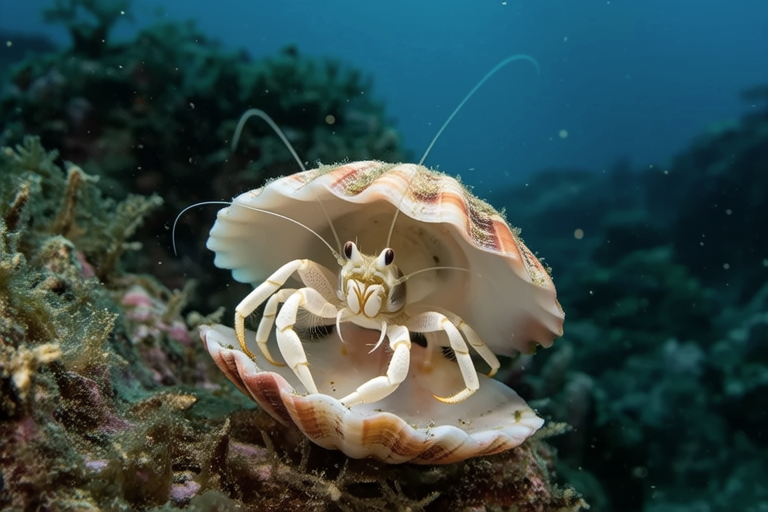
Pea Crabs and Their Mollusk Partners: A Love Story Underwater
In the vast and mysterious underwater world, there exists a fascinating tale of partnership and mutual dependence. This love story unfolds between pea crabs and their mollusk hosts, a relationship that has evolved over millions of years. These tiny crustaceans, known as pea crabs, live inside various mollusks, such as clams and sea cucumbers, benefiting from protection and food while contributing to their hosts’ well-being. This article delves into the intricacies of this symbiotic relationship, exploring the life cycle of pea crabs, their unique adaptations, and the challenges they face in maintaining this delicate balance.
The Underwater Habitat: A World of Opportunities
The underwater realm, teeming with life, offers countless niches for species to exploit. Among these, the seafloor presents a particularly rich habitat for many organisms, including clams and other bivalves. These mollusks spend their lives burrowed in the sand or attached to rocks, filtering water for food and sheltering themselves from predators. It is within this environment that pea crabs find their perfect home.
Pea crabs, named for their small size and resemblance to peas, are among the smallest true crabs in the world. They belong to the family Pinnotheridae and can be found in both saltwater and brackish environments around the globe. While most crabs are free-living, pea crabs have adapted to a life within the bodies of their hosts. This adaptation allows them to enjoy the benefits of protection and a steady supply of nutrients, making it easier for them to survive in the challenging marine environment.
The Symbiotic Relationship: A Tale of Mutualism
The relationship between pea crabs and their mollusk hosts is a classic example of mutualism, a type of symbiosis where both partners benefit. For the pea crabs, the host provides a safe haven from predators and a reliable source of food. Inside the clam’s mantle cavity, pea crabs find refuge from larger predators that would otherwise pose a threat. Additionally, the host’s feeding apparatus, which filters plankton and other organic matter from the water, supplies the pea crab with a constant stream of nutrients.
In return, pea crabs contribute to the health of their hosts in several ways. They assist in cleaning the gills of the host, removing debris and parasites that could hinder respiration. Furthermore, pea crabs may also help in the reproduction process by protecting the eggs and larvae of the host. This mutual support ensures the survival and prosperity of both species.
The Life Cycle of Pea Crabs: From Egg to Adult
The life cycle of pea crabs is as fascinating as their symbiotic relationship. Female pea crabs lay their eggs in the water column, where they hatch into free-swimming larvae. These larvae are carried by ocean currents until they find a suitable host. Upon locating a potential host, the larvae enter the host’s body through the gills or other openings and undergo metamorphosis into juvenile crabs.
Once inside the host, the juvenile crabs grow rapidly, taking advantage of the abundant resources provided by their host. As they mature, the crabs become more specialized for their life within the host, developing flattened bodies and reduced appendages to better fit into the confined space. The adult pea crabs continue to live within the host for the remainder of their lives, reproducing and passing on their genes to the next generation.
Unique Adaptations for Living Within Hosts
To thrive within their hosts, pea crabs have developed a series of remarkable adaptations. Their flattened bodies allow them to maneuver easily within the tight spaces of the host’s body, while their reduced appendages prevent damage to the delicate tissues of the host. In addition, pea crabs possess specialized mouthparts that enable them to feed on the host’s excretions and the mucus lining the host’s mantle cavity.
One of the most intriguing aspects of pea crab biology is their ability to influence the reproductive cycles of their hosts. Some species of pea crabs can delay the maturation of their host’s eggs, ensuring that the host remains fertile for longer periods. This manipulation benefits both the pea crabs and their hosts, as it increases the chances of successful reproduction for both parties.
Threats to the Symbiosis: Challenges in the Marine Environment
Despite the benefits of their symbiotic relationship, pea crabs and their hosts face numerous challenges in maintaining their partnership. One of the primary threats comes from human activities, such as pollution and overfishing, which can disrupt the delicate balance of marine ecosystems. Pollution can introduce harmful substances into the water, affecting the health of both pea crabs and their hosts, while overfishing can reduce the availability of suitable hosts for pea crabs.
Climate change also poses a significant threat to the survival of pea crabs and their hosts. Rising sea temperatures and ocean acidification can alter the physiology and behavior of both species, potentially disrupting their symbiotic relationship. To ensure the continued success of this partnership, it is crucial to address these environmental challenges and protect the marine habitats that support these unique creatures.
The Future of Pea Crabs and Their Mollusk Partners
The future of pea crabs and their mollusk hosts depends on our ability to understand and protect the marine environment. By studying the intricate details of their symbiotic relationship, we can gain valuable insights into the complex web of life in the oceans. This knowledge can inform conservation efforts and help preserve the biodiversity of marine ecosystems.
As we continue to explore the depths of the ocean, we will undoubtedly uncover more secrets about the relationships between organisms. The story of pea crabs and their mollusk partners serves as a reminder of the importance of cooperation and mutual support in the natural world. By fostering these partnerships, we can ensure the continued health and prosperity of our planet’s marine ecosystems.
