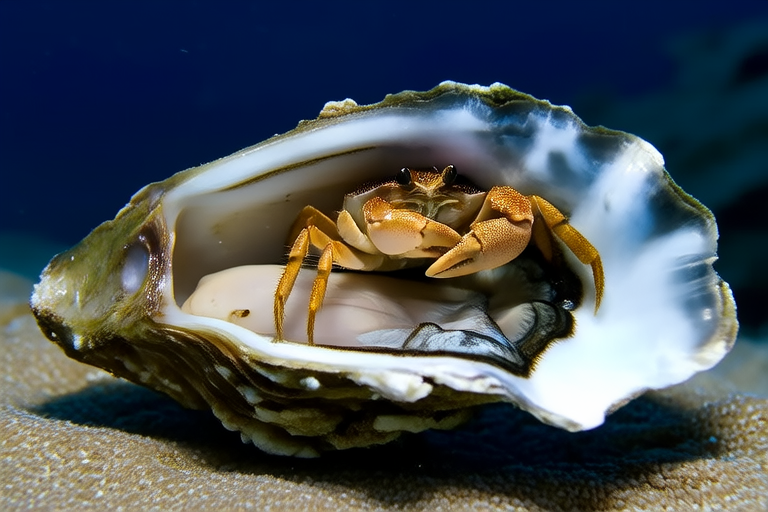
Pea Crabs: Nature’s Hidden Partners in Oyster Shells
Welcome to a journey into the fascinating world of pea crabs, tiny crustaceans that live a secretive life inside the shells of oysters. These petite creatures, measuring less than an inch in length, are nature’s hidden partners, thriving in an environment that few other animals can access. This article delves into the unique life of pea crabs, their symbiotic relationship with oysters, and the significance of their existence for marine ecosystems.
The Pea Crab: A Tiny Marvel
Pea crabs, belonging to the family Pinnotheridae, are among the smallest true crabs in the world. Their diminutive size, typically under an inch, allows them to fit snugly inside the protective shells of bivalve mollusks like oysters, clams, and mussels. These crabs are often overlooked due to their small stature, but their presence is crucial in the intricate web of marine life.
Living inside the oyster shell provides pea crabs with a safe haven from predators. The oyster’s tough, calcified shell acts as a fortress, shielding the crabs from larger marine creatures that might otherwise make a meal out of them. Inside this sanctuary, pea crabs can grow and reproduce in relative safety.
A Symbiotic Union
The relationship between pea crabs and oysters is a classic example of mutualism, where both species benefit from each other. While the oyster provides shelter and protection, the pea crab offers a unique service in return. These tiny crabs feed on the oyster’s gonads and other internal tissues, which would otherwise be consumed by parasites or bacteria. By doing so, they help keep the oyster healthy and free from disease.
Interestingly, pea crabs also aid in the reproduction of oysters. Female pea crabs stimulate the release of eggs from female oysters, potentially increasing the reproductive success of their hosts. In return, the oysters provide the pea crabs with a stable environment and food supply. This interdependence highlights the delicate balance maintained within marine ecosystems.
The Life Cycle of Pea Crabs
The life cycle of pea crabs begins with microscopic larvae, known as zoeae, which drift freely in the ocean currents. These larvae are carried by tides until they encounter an oyster. Once they find a suitable host, the larvae enter the oyster’s gills through the mantle cavity, a process facilitated by the oyster’s feeding mechanisms. The young pea crabs then settle into the gills, where they metamorphose into juvenile crabs.
As they mature, the pea crabs move deeper into the oyster, taking up residence in the mantle cavity or within the gills. Here, they continue to grow and develop, eventually reaching adulthood. Throughout their lifecycle, pea crabs remain within the confines of their oyster host, relying on it for both shelter and sustenance.
Challenges and Threats
Despite their successful adaptation to life within oyster shells, pea crabs face numerous challenges. Environmental changes, such as rising sea temperatures and increased pollution, can impact both the oysters and the pea crabs. Additionally, overfishing and habitat destruction pose significant threats to these symbiotic relationships.
In areas affected by human activities, such as coastal development and aquaculture, the delicate balance between pea crabs and oysters can be disrupted. Pollution can introduce harmful chemicals into the water, affecting the health of both species. Moreover, the introduction of non-native species can alter the local ecosystem, potentially displacing native pea crabs and oysters.
The Importance of Studying Symbiotic Relationships
The study of pea crabs and their symbiotic relationship with oysters holds great importance for marine conservation and ecological balance. Understanding these interactions can provide valuable insights into the functioning of marine ecosystems and the factors that influence their stability.
By studying the symbiosis between pea crabs and oysters, researchers can develop strategies to protect these species and the broader marine environment. Conservation efforts aimed at preserving oyster reefs, for instance, can have far-reaching benefits for pea crabs and other marine organisms that depend on these habitats.
Moreover, the hidden world within oyster shells serves as a reminder of the complexity and interconnectedness of marine life. Each oyster harbors a unique community of organisms, including pea crabs, algae, and bacteria, all contributing to the overall health of the reef. Protecting these hidden partnerships is essential for maintaining the biodiversity and resilience of our oceans.
Conclusion
Pea crabs, with their tiny size and remarkable ability to thrive within oyster shells, exemplify the wonders of marine biology. Their symbiotic relationship with oysters showcases the intricate balance that exists within marine ecosystems. By understanding and protecting these hidden partnerships, we can work towards preserving the rich diversity of life beneath the waves.
The fascinating world within oyster shells invites us to explore the lesser-known aspects of marine life. As we delve deeper into the mysteries of the ocean, we uncover a tapestry of relationships that highlight the importance of every organism, no matter how small, in maintaining the delicate balance of our planet’s ecosystems.
