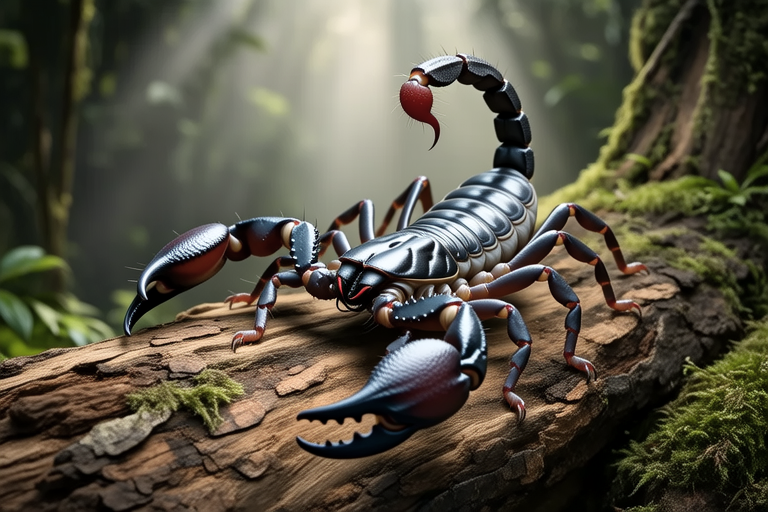
The Gentle Giant: An Exploration of Heterometrus Spinifer
Heterometrus spinifer, commonly known as the Indian forest scorpion, is a fascinating creature that challenges many preconceived notions about scorpions. Despite its intimidating appearance, this species is renowned for its gentle demeanor. This article delves into the unique characteristics, habitat, behavior, and conservation status of Heterometrus spinifer, offering scientific insights, comparisons with other scorpion species, and debunking myths surrounding this gentle giant.
Unique Characteristics
With an average length of around 9 centimeters, Heterometrus spinifer is one of the largest scorpions in India. Its most striking feature is the prominent spine-like structures on its tail, which give it its name. These spines are not just ornamental; they play a crucial role in the scorpion’s defense mechanism. The venom produced by Heterometrus spinifer is relatively mild compared to that of other scorpion species, making it less dangerous to humans.
Unlike many other scorpions, Heterometrus spinifer has adapted to live in a wide range of habitats, from dense forests to rocky terrains. This adaptability is one of the reasons why it thrives in various parts of India. Its body is well-suited for life in these diverse environments, with powerful pincers and long legs that help it navigate through underbrush and rocky crevices.
Habitat and Behavior
The Indian forest scorpion is primarily nocturnal, spending most of its day hidden under rocks, logs, or leaf litter. It emerges at night to hunt for prey, which includes insects, spiders, and even small vertebrates like lizards. Its hunting strategy involves patience and precision; it waits for prey to come within reach before striking with its powerful pincers. Once caught, the scorpion uses its venomous sting to immobilize the victim.
One of the most intriguing aspects of Heterometrus spinifer‘s behavior is its social structure. Unlike many other scorpion species, which are solitary and territorial, Heterometrus spinifer often lives in small groups. These groups are usually composed of family members, including parents and offspring. This social behavior is rare among scorpions and suggests a level of cooperation that is not commonly observed in the animal kingdom.
Myths and Misconceptions
Despite its gentle nature, Heterometrus spinifer is often misunderstood. Many people associate scorpions with danger and aggression, leading to fear and avoidance. However, this species is far more docile than its reputation suggests. In fact, it will only use its stinger as a last resort when threatened. Even then, the venom is mild and rarely causes serious harm to humans.
Another common misconception is that all scorpions glow under ultraviolet light. While it is true that Heterometrus spinifer does fluoresce under UV light, not all scorpions exhibit this trait. The fluorescence is believed to be a byproduct of certain pigments in the scorpion’s exoskeleton and serves no known biological function.
Role in Ecosystems
As a top predator in its ecosystem, Heterometrus spinifer plays a vital role in controlling insect populations. By preying on a wide variety of insects, it helps maintain ecological balance and prevents outbreaks of pest species. Additionally, its presence in an ecosystem can serve as an indicator of environmental health. A thriving population of Heterometrus spinifer suggests a healthy and diverse environment.
The scorpion’s interaction with other species is not limited to predation. It also serves as a food source for larger predators, such as birds and mammals. This dual role as both predator and prey highlights the intricate web of relationships within its ecosystem. Moreover, its burrowing behavior helps aerate soil, promoting healthier plant growth.
Conservation Status
Unfortunately, Heterometrus spinifer faces several threats to its survival. Habitat destruction due to deforestation and urbanization poses the greatest risk. As human activities encroach upon its natural habitat, the scorpion’s ability to find suitable living conditions diminishes. Pollution and climate change further exacerbate the situation, making it increasingly difficult for the species to thrive.
To address these challenges, conservation efforts are underway to protect Heterometrus spinifer and its habitat. Protected areas have been established to safeguard critical ecosystems, and educational programs aim to raise awareness about the importance of preserving biodiversity. Additionally, research initiatives focus on understanding the species’ biology and ecology better, providing valuable insights for conservation strategies.
Diet and Lifespan
The diet of Heterometrus spinifer consists mainly of insects, but it is not picky about its meals. It will consume anything it can catch, including spiders, centipedes, and even small vertebrates. Its digestive system is highly efficient, allowing it to extract maximum nutrition from its prey. This adaptability in diet contributes to its resilience in different environments.
Regarding lifespan, Heterometrus spinifer can live up to 8 years in the wild. In captivity, where conditions are controlled, it may live slightly longer. Factors such as food availability, environmental conditions, and predation pressure influence its longevity. Captive breeding programs have shown promising results in extending the lifespan of this species, providing valuable data for conservation efforts.
Interactions with Humans
While Heterometrus spinifer is generally harmless to humans, encounters with this species can still be unsettling for those unfamiliar with its gentle nature. Encounters typically occur when humans venture into the scorpion’s natural habitat, such as during hiking trips or while exploring caves and rock formations.
However, the scorpion’s gentle demeanor means that it poses little threat to humans. It will only use its stinger if provoked or cornered. Even then, the venom is mild and rarely causes serious harm. In fact, many people who encounter Heterometrus spinifer report feeling more intrigued than afraid after learning about its gentle nature.
Conclusion
Heterometrus spinifer is a remarkable species that challenges many stereotypes about scorpions. Its gentle nature, despite its intimidating appearance, makes it a fascinating subject for study and admiration. By understanding its unique characteristics, behavior, and role in ecosystems, we can appreciate the complexity of this gentle giant and work towards its conservation. As we continue to explore and learn about Heterometrus spinifer, we gain valuable insights into the diversity of life on our planet and the importance of protecting it.
