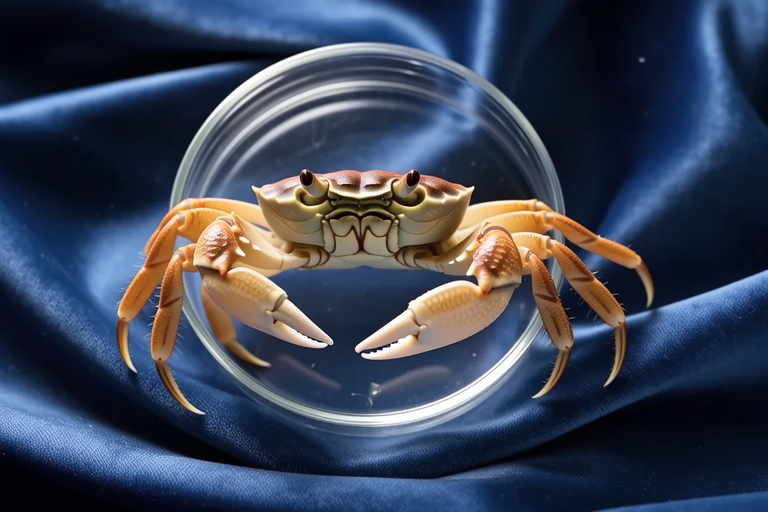
Uncovering the Secrets of Pea Crabs: How These Mini Crustaceans Thrive
Welcome to an exploration into the fascinating world of pea crabs, tiny crustaceans that play a significant role in marine ecosystems. Despite their diminutive size, these creatures have adapted to thrive in a variety of environments, forming complex relationships with other marine organisms. This article will delve into the intriguing aspects of pea crabs, from their unique anatomy and reproductive strategies to their symbiotic relationships and ecological importance.
The Tiny Giants of the Sea
Pea crabs (Pinnotheridae) are small, soft-bodied crustaceans known for their petite stature, typically measuring less than half an inch in length. Their name derives from their resemblance to peas in both size and shape. Found in coastal waters around the globe, pea crabs inhabit a diverse range of environments, from shallow bays and estuaries to deeper offshore areas. Their adaptability to different habitats has allowed them to colonize regions as varied as the tropics and the polar seas.
Symbiotic Relationships: Coexisting with Marine Organisms
One of the most remarkable features of pea crabs is their symbiotic relationship with various marine organisms. They often live inside the shells of bivalves such as mussels and clams, where they find protection and a steady supply of food. The crab’s presence benefits its host by cleaning out parasites and detritus, thus enhancing the host’s health and longevity. This mutualistic relationship ensures both parties benefit, as the crab gains a safe haven and a reliable food source.
In addition to their association with bivalves, some species of pea crabs are known to reside within sea cucumbers. These crabs burrow into the sea cucumber’s body cavity, feeding on the nutrients found there. This arrangement provides the crab with a secure environment and sustenance, while the sea cucumber may gain protection from certain predators due to the crab’s presence.
Anatomy and Reproduction
The anatomy of pea crabs is well-suited for their lifestyle within enclosed spaces. Their flattened bodies allow them to navigate narrow crevices, and their reduced size enables them to fit comfortably inside the shells of their hosts. The crabs possess specialized appendages for feeding, which include long, slender mouthparts designed to filter particles from the water.
Reproduction among pea crabs is a fascinating process. Mating usually occurs when the female is still inside her host, ensuring that the offspring will have immediate access to shelter upon hatching. After mating, the female carries her eggs externally, attached to her abdomen. Once the eggs hatch, the larvae enter the water column, where they drift freely before settling on a suitable host. This reproductive strategy increases the chances of successful colonization and continuation of the species.
Lifecycle and Adaptations
The lifecycle of pea crabs begins with the hatching of larvae, which then undergo several molts as they develop into juvenile crabs. During this stage, they search for a suitable host to inhabit. Once established within a host, the crab continues to molt periodically throughout its life, growing larger with each successive stage. The average lifespan of a pea crab ranges from one to three years, depending on factors such as environmental conditions and predation pressure.
To survive in their challenging habitats, pea crabs have developed several key adaptations. Their ability to remain hidden within the shells of their hosts provides protection against predators. Additionally, their flattened bodies enable them to squeeze through tight spaces, allowing them to escape potential threats. Furthermore, their reduced size and minimal movement help them avoid attracting attention from larger marine animals.
Interesting Behaviors and Survival Tactics
Pea crabs exhibit intriguing behaviors that contribute to their survival. For instance, they are capable of detecting chemical signals released by potential hosts, guiding them towards suitable living arrangements. This olfactory sensitivity plays a crucial role in ensuring the crabs can locate appropriate hosts during their larval stages.
Another notable adaptation is their ability to alter their feeding habits based on the availability of resources within their host. When food supplies are scarce, pea crabs may resort to cannibalism, consuming smaller individuals of their own species. This survival tactic underscores the competitive nature of life within confined spaces.
Ecological Significance and Conservation Efforts
Pea crabs play an essential role in maintaining the balance of marine ecosystems. By cleaning the shells of bivalves and feeding on parasites, they help maintain the health of their hosts and contribute to overall biodiversity. Their presence also serves as an indicator of the health of local marine environments, as changes in pea crab populations can signal shifts in ecosystem dynamics.
Current research focuses on understanding the specific interactions between pea crabs and their hosts, as well as investigating the impact of environmental stressors on these relationships. Scientists are particularly interested in how climate change and pollution might affect the distribution and abundance of pea crabs. Conservation efforts aim to protect critical habitats and promote sustainable practices that support healthy marine ecosystems, ensuring the continued existence of these remarkable creatures.
In conclusion, pea crabs are more than just tiny inhabitants of marine environments; they are integral components of complex ecosystems. Through their symbiotic relationships, unique anatomical features, and adaptive behaviors, these mini crustaceans demonstrate the resilience and ingenuity of life in the ocean. As we continue to explore and understand the secrets of pea crabs, it becomes increasingly clear that preserving their habitats and studying their interactions is vital for maintaining the health and diversity of our oceans.
