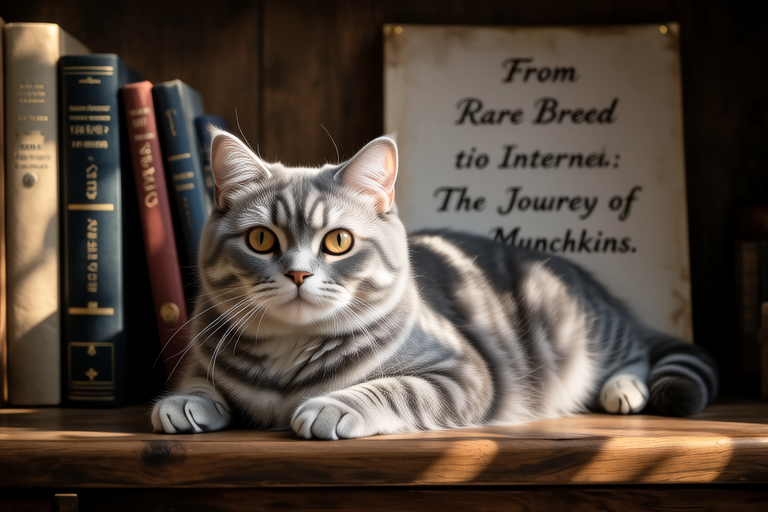
From Rare Breed to Internet Sensation: The Journey of Munchkin Cats
The world of cat enthusiasts has been captivated by a breed that defies traditional feline norms with its distinctive appearance. Munchkin cats, known for their exceptionally short legs, have journeyed from relative obscurity to becoming internet sensations. This article delves into the unique physical characteristics, historical origins, challenges, and the pivotal role of social media in transforming these cats into beloved household pets.
Unique Physical Characteristics
Munchkin cats are most recognizable for their unusually short legs, a genetic trait that sets them apart from other breeds. Their front legs can be up to half the length of those found in typical cats, while their hind legs remain relatively normal. Despite this striking difference, Munchkins are otherwise similar to their longer-legged counterparts, retaining the agility and grace characteristic of all felines. Their short stature does not hinder their ability to leap, climb, or play; instead, it adds a charming quirkiness to their movements.
Origin and Myths
The Munchkin breed traces its roots back to the late 20th century, with the first recorded litter born in Louisiana in 1983. A domestic shorthair named Blackberry was discovered with unusually short legs, and her kittens inherited this trait. The breed’s name was inspired by the diminutive characters in L. Frank Baum’s “The Wizard of Oz.” There are various myths surrounding the breed’s origin, some suggesting that the mutation resulted from a genetic experiment gone awry. However, genetic testing has confirmed that the trait is naturally occurring, albeit rare.
Initial Challenges
The initial reception of Munchkin cats was far from enthusiastic. Many breeders and veterinarians raised concerns about potential health issues stemming from their unique physiology. Skepticism surrounded the breed’s ability to thrive, with critics arguing that the short-legged trait might lead to skeletal deformities and mobility issues. The breed faced significant opposition from organizations like The International Cat Association (TICA), which initially refused to recognize Munchkins due to health concerns.
Transformation through Social Media
The turning point for Munchkin cats came with the advent of social media platforms. These digital spaces provided a perfect stage for showcasing the breed’s charm and charisma. Influential figures, such as celebrity cat owners and social media personalities, played a crucial role in popularizing Munchkins. One notable moment was when a Munchkin cat named Lil Bub gained widespread recognition for her unique appearance and endearing personality. Her YouTube channel amassed millions of subscribers, helping to normalize the breed among the general public.
Viral Moments and Anecdotes
Several viral moments have cemented Munchkins’ status as internet sensations. Videos of Munchkins leaping and climbing despite their short legs have gone viral, dispelling earlier fears about their agility. One particularly popular video shows a Munchkin cat attempting to catch a toy mouse, its stubby legs barely visible beneath its body. Another heartwarming moment involved a Munchkin cat adopting a litter of kittens, demonstrating the breed’s nurturing instincts.
Reflections on the Future
As Munchkin cats continue to grow in popularity, it is essential to address ongoing health issues and ethical breeding practices. Breeders must prioritize the health and well-being of each cat, ensuring that they live long, healthy lives. Genetic testing and selective breeding can help mitigate potential health risks associated with the short-legged trait. Additionally, responsible ownership is crucial in maintaining the breed’s positive reputation.
In conclusion, Munchkin cats have come a long way from being a rare and controversial breed to becoming beloved internet sensations. Their journey highlights the power of social media in shaping public perception and the importance of addressing health concerns responsibly. As we look to the future, it is our collective responsibility to ensure that these unique creatures continue to thrive and bring joy to many.
