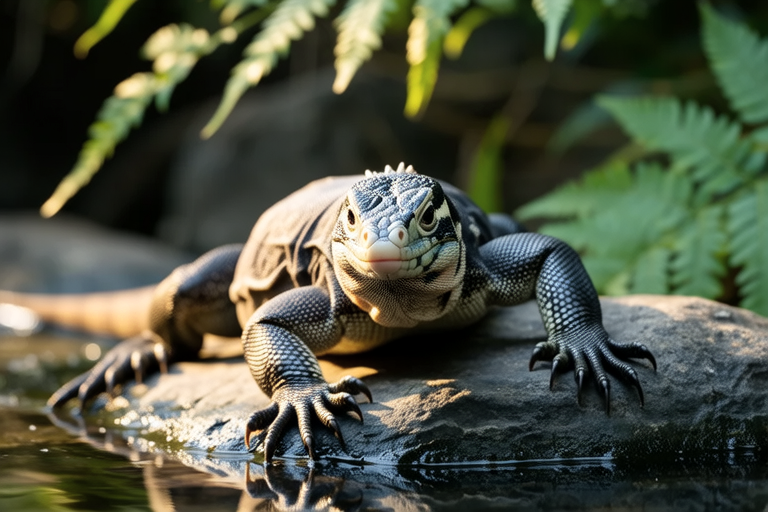
Exploring Water Monitors: Secrets of Their Lives
The water monitor (Varanus salvator) is one of the largest lizards in the world, renowned for its impressive size and remarkable adaptability. Found across Southeast Asia, from India to Indonesia, this reptile has intrigued scientists and nature enthusiasts alike with its unique behaviors, habitats, and lesser-known facts. This article delves into the fascinating world of water monitors, exploring their behaviors, habitats, and adaptations, while also shedding light on their dietary habits, social structures, and conservation status.
Habitats and Adaptations
Water monitors inhabit a diverse range of environments, including mangrove swamps, rivers, lakes, and coastal areas. Their name derives from their exceptional swimming abilities; they can remain submerged for up to 30 minutes, propelling themselves through water with powerful strokes of their muscular tails. These lizards have evolved several unique adaptations that allow them to thrive in their aquatic environment. For instance, they possess long, sharp claws that enable them to climb trees with ease and dig burrows for shelter or to lay eggs. Their keen sense of smell helps them locate prey both above and below the water’s surface.
In addition to their physical adaptations, water monitors exhibit remarkable behavioral flexibility. They are opportunistic feeders, consuming a wide variety of foods, including fish, frogs, insects, small mammals, and even carrion. Their ability to adapt their diet based on availability ensures their survival in changing environmental conditions. One lesser-known fact about water monitors is their tendency to use tools; they have been observed using sticks and rocks to probe holes or crevices in search of food, showcasing an advanced level of problem-solving behavior.
Dietary Habits
The dietary preferences of water monitors vary depending on their location and age. Younger individuals tend to consume smaller prey, such as insects and small fish, whereas adults have a more varied diet that includes larger animals like birds, snakes, and rodents. Their strong jaws and sharp teeth make it easy for them to catch and subdue their prey. One interesting aspect of their feeding habits is their ability to detect chemical signals released by potential meals. Studies have shown that water monitors can identify hidden prey using their tongues to collect scent particles from the air and ground, which are then transferred to a specialized organ in the roof of their mouth called the Jacobson’s organ.
Water monitors play a crucial role in maintaining ecological balance within their ecosystems. By preying on invasive species and controlling populations of other animals, they help prevent overpopulation and promote biodiversity. Their scavenging behavior also aids in breaking down organic matter and returning nutrients to the soil, contributing to overall ecosystem health. Understanding the dietary habits of water monitors is essential for conservation efforts, as changes in their food sources could impact their survival and the health of entire ecosystems.
Social Structures
Unlike many reptiles, water monitors display some degree of social behavior. While they are generally solitary creatures, they sometimes gather in groups during certain times of the year, particularly during breeding season or when resources are abundant. Males engage in combat to establish dominance and secure mating rights, often resulting in impressive displays of strength and agility. Females typically lay clutches of up to 40 eggs in burrows or termite mounds, where the eggs incubate for several months before hatching.
Personal anecdotes from researchers and wildlife enthusiasts highlight the intelligence and curiosity of water monitors. Many have reported instances of these lizards interacting with humans, approaching them cautiously but without fear. Some have even been known to follow people along riverbanks, possibly out of interest or in search of food. These observations suggest that water monitors may possess higher cognitive abilities than previously thought, further emphasizing the need for continued research into their behavior and ecology.
Conservation Status
Despite their widespread distribution, water monitors face numerous threats due to habitat loss, hunting, and illegal trade. The International Union for Conservation of Nature (IUCN) currently lists the species as Least Concern, but localized declines have been noted in some regions. Efforts to protect water monitors and their habitats include establishing protected areas, promoting sustainable land-use practices, and raising awareness about the importance of conserving these remarkable creatures.
One notable scientific discovery regarding water monitors involves their immune system. Researchers have found that these lizards possess a unique set of antimicrobial peptides in their blood that could potentially be used to develop new treatments for human diseases. This finding underscores the value of studying water monitors not only for ecological reasons but also for medical advancements. It highlights the interconnectedness of all life forms and the potential benefits of preserving biodiversity.
Conclusion
Water monitors are truly fascinating creatures with many secrets yet to be uncovered. From their remarkable swimming abilities and tool use to their important role in maintaining ecological balance, these lizards offer valuable insights into the natural world. As we continue to explore their behaviors, habitats, and adaptations, it becomes increasingly clear that understanding and protecting water monitors is vital for ensuring the health of our planet’s ecosystems. By supporting conservation initiatives and fostering appreciation for these incredible animals, we can help safeguard their future and preserve the rich tapestry of life on Earth.
