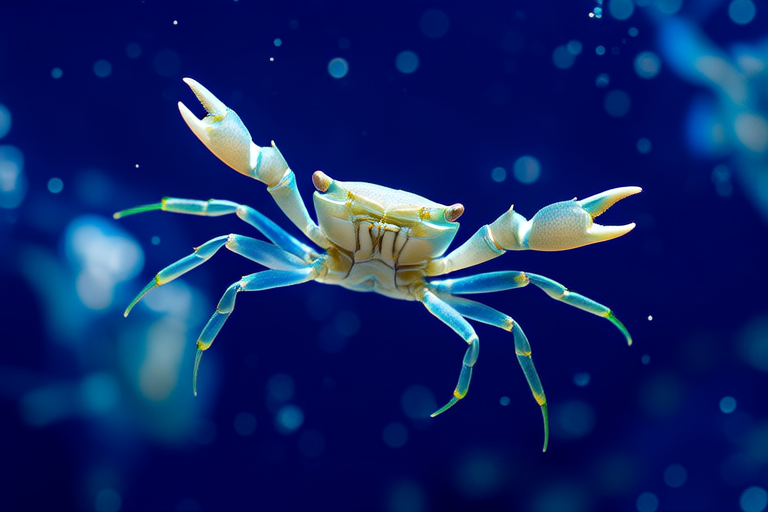
Microscopic Marvels: Discovering the Tiny World of Pea Crabs
In the vast ocean, where giant whales and colorful coral reefs capture our attention, there exists a world of microscopic marvels that often goes unnoticed. Among these hidden treasures are pea crabs, tiny crustaceans that live inside the shells of bivalves such as mussels and clams. These fascinating creatures have adapted to live in harmony with their hosts, creating a unique symbiotic relationship that has intrigued scientists for years. Let’s dive into the world of pea crabs and explore their remarkable lives.
The Size and Habitat of Pea Crabs
Pea crabs are some of the smallest crabs in the world, measuring only about half an inch (1.2 cm) in length. Despite their diminutive size, they play a crucial role in marine ecosystems. These crabs are found in various habitats, from shallow coastal waters to deep-sea environments, depending on the species. They are particularly common in areas rich in bivalves, which serve as both their homes and sources of food.
A Unique Symbiotic Relationship
The most striking feature of pea crabs is their symbiotic relationship with bivalves. Pea crabs live inside the mantle cavity of their host, where they are protected from predators and have access to a steady supply of food. In return, the crabs help clean the host by consuming parasites and detritus. This mutualistic relationship benefits both parties, allowing the crabs to thrive while also contributing to the health of their hosts.
Anatomy and Life Cycle
The anatomy of pea crabs is well-suited to their lifestyle within the confines of a bivalve shell. Their flattened bodies and long legs enable them to move efficiently through the narrow spaces inside their hosts. Pea crabs have specialized mouthparts called chelipeds, which they use to grasp and consume food particles. The life cycle of pea crabs begins when the female crab lays her eggs in the safety of her host’s mantle cavity. After hatching, the larvae enter the water column, where they undergo several molts before settling on a suitable bivalve host.
Challenges and Behavior
Life inside a bivalve shell presents several challenges for pea crabs. Space is limited, and competition for resources can be fierce, especially during the early stages of development. To overcome these obstacles, pea crabs have developed remarkable behaviors. For instance, they have been observed sharing space with other pea crabs or even multiple species of bivalves. Additionally, pea crabs are known to engage in complex mating rituals, with males sometimes carrying females on their backs to ensure successful fertilization.
Recent Scientific Discoveries
Recent studies have shed light on the genetic diversity and evolutionary history of pea crabs. Researchers have discovered that some species of pea crabs are more closely related to each other than previously thought, suggesting a shared ancestry. Furthermore, advancements in molecular biology techniques have allowed scientists to better understand the genetic adaptations that enable pea crabs to survive in their unique environments. These findings contribute to our knowledge of marine biodiversity and provide valuable insights into the evolution of symbiotic relationships.
The Significance of Studying Pea Crabs
Studying pea crabs is essential for understanding broader ecological systems. By examining the interactions between pea crabs and their hosts, researchers can gain insights into the dynamics of marine ecosystems and the factors that influence biodiversity. Additionally, the study of pea crabs may have practical applications, such as informing conservation efforts and developing new methods for pest control in aquaculture. As we continue to explore the microscopic world, the tiny wonders of pea crabs remind us of the intricate connections that exist within nature.
Pea crabs are truly microscopic marvels, offering a glimpse into the hidden world of marine life. Through their unique adaptations and symbiotic relationships, these tiny creatures have found a way to thrive in challenging environments. By studying pea crabs, we not only deepen our understanding of marine ecosystems but also gain valuable insights into the delicate balance that sustains life in the ocean.
