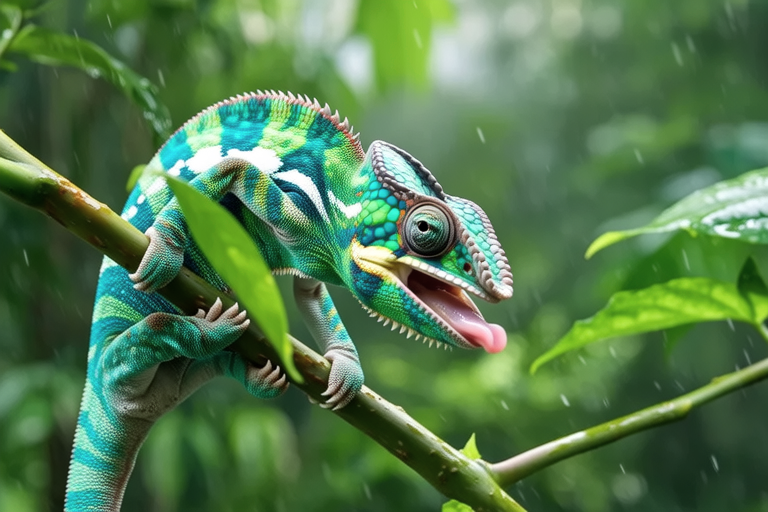
7 Mind-Blowing Facts About Chameleons That Will Change Your Perception
Chameleons, those captivating reptiles often associated with their ability to change color, have long been a subject of fascination for both children and adults alike. But beyond their striking appearance, these creatures possess a myriad of extraordinary traits that challenge our understanding of nature’s ingenuity. From their remarkable eyesight to their specialized tongues, chameleons are a testament to evolution’s creativity. In this article, we will delve into seven mind-blowing facts about chameleons that will surely alter your perception of these amazing animals.
Fact 1: The Incredible Eyes of Chameleons
One of the most distinctive features of chameleons is their extraordinary eyes. Unlike other reptiles, chameleons can rotate their eyes independently, allowing them to look in two different directions simultaneously. This unique adaptation enables chameleons to survey their surroundings with exceptional precision, enhancing their ability to spot prey or potential threats. Each eye can move through a 360-degree arc, providing nearly a full view of their environment. This remarkable capability is particularly useful for ambush predators like chameleons, who rely on surprise to catch their meals.
Recent studies have shown that this advanced visual system also allows chameleons to perceive polarized light, which helps them detect the presence of other chameleons. This ability is crucial for communication and territorial disputes, as it enables chameleons to see patterns invisible to the human eye. The intricate network of muscles controlling each eye gives chameleons a level of depth perception unmatched by any other animal. It’s as if they carry two tiny cameras on their heads, constantly scanning for danger or opportunities.
Fact 2: The Power of the Chameleon Tongue
The chameleon’s tongue is perhaps one of the most awe-inspiring adaptations in the animal kingdom. Proportionally, it can be twice as long as the lizard’s body, making it one of the fastest appendages in the world. When hunting, a chameleon can extend its tongue at speeds reaching up to 26 body lengths per second. This rapid movement creates a suction effect, effectively capturing insects mid-air.
What makes this even more impressive is the composition of the tongue itself. It is covered in sticky saliva and reinforced with collagen fibers, which give it the necessary strength and flexibility. Researchers have discovered that the tongue’s acceleration is so swift that it generates forces equivalent to several times the force of gravity. This incredible power is due to the stored elastic energy within the tongue, which is released when the chameleon strikes.
Interestingly, the length of the tongue varies among species, with some chameleons having tongues shorter than others. However, all chameleons share this incredible hunting mechanism, which has evolved over millions of years to ensure their survival in diverse environments.
Fact 3: Color-Changing Abilities
While many people associate chameleons primarily with their color-changing abilities, these adaptations serve more purposes than just camouflage. Chameleons can alter their skin color to communicate with other chameleons, regulate body temperature, and express emotions. Their color-changing cells, known as chromatophores, contain pigments that reflect different wavelengths of light.
The latest research indicates that chameleons can change their color not only to match their background but also to signal aggression, submission, or readiness to mate. For instance, males may display vibrant colors during territorial disputes or courtship displays. Female chameleons, on the other hand, might show darker hues when they are not receptive to mating. This complex communication system underscores the importance of color changes beyond mere camouflage.
Moreover, chameleons can change their skin texture as well. Some species can flatten themselves against branches or puff up their bodies to appear larger and more intimidating. These adaptations demonstrate the versatility and intelligence of these reptiles in navigating their complex social and environmental landscapes.
Fact 4: Diverse Habitat and Adaptations
Chameleons are found across various regions of the world, from Madagascar to parts of Africa and southern Europe. They thrive in a wide range of habitats, including rainforests, deserts, and savannas. Each environment presents unique challenges, and chameleons have adapted accordingly. For example, desert-dwelling chameleons have developed efficient water conservation mechanisms, such as reduced urinary output and the ability to reabsorb water from their feces.
In tropical forests, chameleons have evolved to blend seamlessly with their surroundings, thanks to their color-changing abilities and leaf-like patterns on their skin. Some species even mimic the appearance of dead leaves to avoid detection by predators. These adaptations highlight the incredible diversity of life on Earth and the endless ways organisms have found to survive and flourish.
Research has shown that chameleons are highly adaptable to changing climates, which is critical given the current global warming trends. Their ability to regulate body temperature through behavioral and physiological means ensures their survival in fluctuating environmental conditions.
Fact 5: Solitary Nature and Territorial Behavior
Unlike many other lizards, chameleons are solitary creatures, preferring to live alone rather than in groups. This solitary lifestyle is reflected in their territorial behavior, where they fiercely defend their territory from intruders. Male chameleons, in particular, engage in elaborate displays of dominance, using their vibrant colors and body postures to intimidate rivals.
These displays can involve rapid color changes, head bobbing, and even physical confrontations. Interestingly, female chameleons are more selective in choosing mates, often rejecting males who fail to meet their criteria. This selective breeding process contributes to the genetic diversity within chameleon populations, ensuring the survival of the fittest.
The solitary nature of chameleons is thought to be linked to their hunting strategy, which requires concentration and stealth. By living alone, chameleons minimize competition for resources and reduce the risk of injury from aggressive encounters with other chameleons.
Fact 6: Unique Reproductive Strategies
Chameleons have developed fascinating reproductive strategies to ensure the survival of their offspring. Many species lay eggs, with females burying them in the ground or under vegetation to incubate. Others, however, give birth to live young, a phenomenon known as viviparity. This adaptation is particularly advantageous in harsh environments where egg-laying might be risky.
Female chameleons can store sperm for months, allowing them to reproduce without the need for frequent mating. This strategy ensures that offspring are produced even when males are scarce. Additionally, some species exhibit parental care, where mothers protect their eggs or offspring until they are old enough to fend for themselves.
Recent studies have shed light on the complex hormonal systems involved in chameleon reproduction, revealing the intricate balance between maternal instincts and survival strategies. Understanding these processes provides valuable insights into evolutionary biology and reproductive ecology.
Fact 7: Threats and Conservation Efforts
Despite their remarkable adaptations, chameleons face numerous threats in the wild. Habitat destruction, climate change, and illegal pet trade are significant concerns for the survival of many species. Several chameleon species are listed as endangered or critically endangered, highlighting the urgent need for conservation efforts.
Efforts to protect chameleons include habitat restoration projects, captive breeding programs, and stricter regulations on the pet trade. Scientists and conservationists work tirelessly to study chameleon behavior and ecology, providing essential information for effective conservation strategies. By raising awareness and supporting these initiatives, we can help preserve these fascinating creatures for future generations.
Furthermore, ongoing research aims to understand the impact of environmental changes on chameleon populations. This knowledge is crucial for developing targeted conservation measures that address specific threats in different regions.
Call to Action
As you’ve learned, chameleons are far more than just colorful lizards capable of blending into their surroundings. Their unique adaptations, behaviors, and ecological roles make them truly remarkable creatures worthy of admiration and protection. To learn more about these fascinating animals, consider visiting local zoos or aquariums, participating in citizen science projects, or supporting conservation organizations dedicated to preserving chameleon habitats.
By becoming informed and engaged, you can play a vital role in ensuring the survival of chameleons and other endangered species. Together, we can safeguard the biodiversity of our planet and continue to marvel at the wonders of nature.
