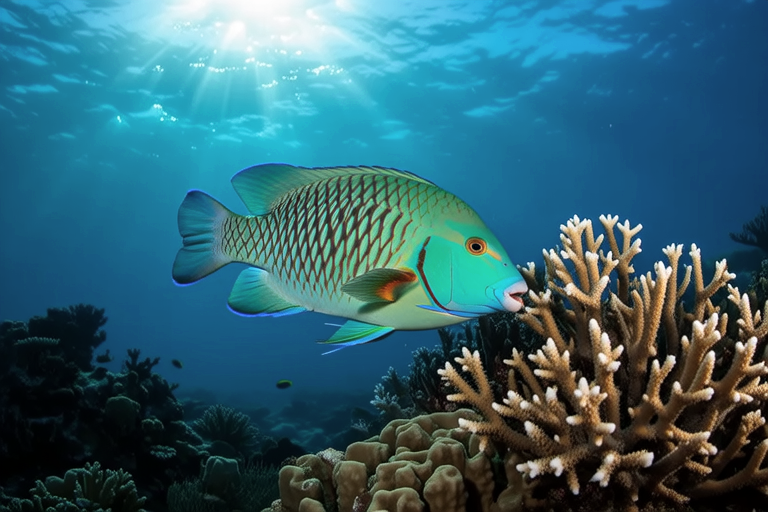
Parrot Fish Secrets: What These Colorful Critters Reveal About Ocean Health
Imagine a fish that looks like it was painted by a tropical artist—vivid blues, electric yellows, fiery reds, and iridescent greens swirling across its body. This is no fantasy creature; it’s the parrotfish, one of the most dazzling denizens of the coral reef. But beyond their breathtaking beauty lies a secret far more vital than mere aesthetics: parrotfish are silent guardians of ocean health, playing a crucial role in maintaining the balance of coral reefs and even shaping the very sand beneath our feet.
These colorful creatures aren’t just eye candy—they’re ecosystem engineers. With beak-like mouths adapted for crunching through coral and algae, parrotfish graze on reef surfaces like underwater lawn mowers. Their feeding habits do more than keep algae in check; they help build the foundation of tropical beaches by turning rock into sand. In fact, a single large parrotfish can produce up to 800 pounds (360 kilograms) of sand each year. That’s not just a fun fact—it’s a lifeline for coastal communities and marine biodiversity alike.
The Algae Control Architects
Coral reefs are among the most diverse ecosystems on Earth, but they exist in a delicate balance. Corals thrive when they’re free from excessive algae, which can smother them and block sunlight. Enter the parrotfish—a natural ally in this daily battle for survival. By grazing on algae growing on coral surfaces, parrotfish prevent algal overgrowth that could otherwise choke out living corals.
But here’s where it gets fascinating: parrotfish don’t just eat algae. They also nibble on live coral. At first glance, this might sound destructive. However, their consumption isn’t random or reckless. Parrotfish target dead or dying coral, scraping off the soft tissue and consuming the calcium carbonate skeleton beneath. In doing so, they clear space for new coral polyps to settle and grow—an essential step in reef recovery after disturbances like storms or bleaching events.
This behavior is part of what scientists call “bioerosion,” a natural process that breaks down old reef material. Without such processes, reefs would become overcrowded with debris, hindering growth and renewal. Parrotfish are key players in this cycle, helping maintain a dynamic equilibrium between reef construction and breakdown.
Sandmakers of the Sea
One of the most astonishing revelations about parrotfish is their role as natural sand factories. When they chew on coral, they ingest small fragments of calcium carbonate—the same mineral that makes up limestone and beach sand. Inside their digestive systems, these fragments are ground down into fine particles. After passing through their gut, the waste is excreted as a fine, white powder—essentially, sand.
Recent studies estimate that parrotfish contribute significantly to the formation of tropical beaches. In some Caribbean regions, up to 90% of the sand on nearby shores may come from parrotfish feces. This means that every time you walk on a sun-drenched beach, you’re stepping on the legacy of these little fish—tiny, powerful architects of our coastlines.
Without parrotfish, the supply of new sand would dwindle. Beaches could erode faster, threatening tourism, property, and coastal protection. The loss of parrotfish, therefore, doesn’t just impact reefs—it affects entire human communities dependent on healthy shorelines.
Reef Resilience and Carbonate Dynamics
Parrotfish play a pivotal role in the carbonate cycle—the movement of carbon-based minerals within marine environments. When they consume coral, they break down calcium carbonate (CaCO₃), a compound essential to reef structure. While this might seem counterintuitive, the process is actually part of a larger ecological loop.
By grinding down old reef material, parrotfish release calcium and carbonate ions back into the water. These minerals can then be reused by other reef organisms, including corals and calcifying algae, to build new skeletons. In effect, parrotfish act as recyclers, transforming dead reef into raw materials for future growth.
Moreover, their grazing helps reduce the risk of algal dominance, which can disrupt the reef’s ability to absorb and store carbon dioxide. Healthy reefs act as carbon sinks, absorbing CO₂ from seawater and helping mitigate climate change. When parrotfish populations decline, reefs become less resilient, making them more vulnerable to acidification and warming oceans—two major drivers of coral bleaching.
A Warning Sign: The Decline of Parrotfish Populations
Despite their ecological importance, parrotfish populations are under serious threat. Overfishing is the primary culprit. In many tropical regions, parrotfish are prized as food—especially in local markets and restaurants catering to tourists. Their slow reproduction rates and tendency to gather in predictable areas make them easy targets for unsustainable fishing practices.
Habitat destruction compounds the problem. Coastal development, pollution, and destructive fishing methods like dynamite or cyanide fishing damage reef structures, reducing the availability of food and shelter for parrotfish. As reefs degrade, so do the fish that depend on them.
Recent research shows alarming trends: in some parts of the Caribbean and Southeast Asia, parrotfish numbers have dropped by more than 50% over the past few decades. Scientists warn that if current patterns continue, we could lose critical reef resilience at a time when oceans are already stressed by climate change.
Here’s why this matters: when parrotfish vanish, algae take over. Without these natural grazers, algae grow unchecked, smothering young corals and preventing reef recovery. This creates a vicious cycle—algae dominance leads to further reef degradation, which leads to fewer parrotfish, which allows even more algae to spread.
This imbalance is a red flag for ocean health. It signals that an entire ecosystem is unraveling—not because of one sudden disaster, but due to gradual, cumulative stressors. Parrotfish serve as early warning indicators, much like canaries in a coal mine. Their decline tells us that something is deeply wrong with how we manage our oceans.
Conservation Efforts and Hope for the Future
But there is hope. Across the globe, conservationists, governments, and local communities are recognizing the value of parrotfish and taking action to protect them.
One effective strategy is the establishment of marine protected areas (MPAs). These zones restrict or ban fishing, allowing fish populations—including parrotfish—to rebound. Studies show that in well-enforced MPAs, parrotfish biomass can increase by several times within just a few years. More importantly, reef health improves: coral cover increases, algae recedes, and fish diversity rebounds.
Another promising approach is the implementation of parrotfish-specific fishing bans. Countries like Bonaire and the Maldives have banned the commercial catch of parrotfish entirely. In Bonaire, a small island nation in the Caribbean, this policy has led to a dramatic recovery of both parrotfish populations and coral reefs. Today, the island’s reefs are among the healthiest in the region—proof that smart, science-based management works.
Education and community engagement are equally vital. Many coastal communities now understand that protecting parrotfish isn’t just about saving a pretty fish—it’s about safeguarding their own livelihoods. Tourism, fishing, and coastal protection all depend on healthy reefs. When people see the direct benefits of conservation, they become stewards of the sea.
Innovative tools are also emerging. Some researchers are using underwater drones and acoustic monitoring to track parrotfish movements and population changes. Others are exploring artificial reefs designed specifically to support parrotfish habitat. These technologies help guide conservation efforts with precision and care.
Our Shared Responsibility
The story of the parrotfish is more than a tale of a colorful fish—it’s a mirror reflecting the health of our oceans. Every time we choose sustainable seafood, support marine conservation, or advocate for stronger environmental policies, we’re sending a message: we value the intricate web of life beneath the waves.
Parrotfish remind us that nature operates in interconnected cycles. A fish that chews coral becomes sand that builds beaches. A reef that thrives supports fish, birds, and humans. When one thread frays, the whole tapestry weakens.
We are not separate from the ocean—we are part of it. Our choices, from the dinner table to the ballot box, ripple through marine ecosystems. Protecting parrotfish isn’t just about saving a species; it’s about preserving the stability of entire reef systems, the beauty of tropical coasts, and the future of our planet’s blue heart.
So next time you stand on a sandy beach, feel the warm grains beneath your toes, and look out at the shimmering sea—remember: those grains were once part of a parrotfish’s meal. And that fish, once protected, helped keep the reef alive. In their quiet, persistent grazing, parrotfish teach us a powerful lesson: that even the smallest creatures can hold the greatest power to heal.
The fate of the parrotfish is not just theirs. It’s ours. And with awareness, action, and a commitment to stewardship, we can ensure that these vibrant guardians continue to thrive—for the reefs, for the sand, and for generations yet to come.
